Interview (Written): Luke Davies
A conversation about the craft with the screenwriter of ‘Lion’ .
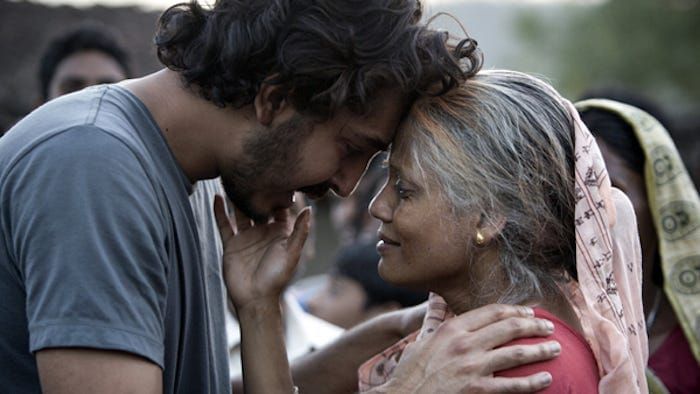
A conversation about the craft with the screenwriter of ‘Lion’ .
You may not have heard about the indie film Lion, but it is garnering strong critical response and the script — adapted by Luke Davies from the book “ALong Way Home” written by Saroo Brierley — has been nominated for several Best Adapted Screenplay awards.
IMDb plot summary: A five-year-old Indian boy gets lost on the streets of Calcutta, thousands of kilometers from home. He survives many challenges before being adopted by a couple in Australia; 25 years later, he sets out to find his lost family.
In a Creative Screenwriting interview, Davies talks about the movie and his evolution as a screenwriter:
Your bibliography covers novels, poetry, journalism, and, of course, screenwriting. How do you approach screenwriting differently than your other writing?
It takes an absolutely fundamentally different part of your brain to write a screenplay. It’s a very technical document that has quite specific rules. The work of art is the film at the end of the road, not this document that is about how to tell the story.
The development of the story — while working with a director in some cases — involves writing a really detailed treatment prose document that everyone can read and get a feel of what it is that we’re all trying to do. That is a really important part of the process even before we get to the blank page one of the screenplay. Then the document itself is super-technical.
On the other hand, I believe that if you want to write a screenplay that is a good emotional experience for anyone who’s reading it, you should somehow try to democratically reach a bunch of different people — producers, financiers, actors, a director, production designer, costume designer, composer. You want a whole lot of people to be able to read this one all-purpose document, because you’re not writing different documents for composers and production designers.
Try to contain everything in there to the best of your ability in a poetic way, where readers can get excited because they’re seeing the movie on the screens inside their heads and feeling the emotions in their hearts and in their guts.
What you want to be doing is to create that excitement, and make people want to move forward, give you money for the film, audition for the film, and make the film in all of these different cases. Most of all, you want the director to say, “Yes, this fits my vision and this is the way I want to portray this incredible story.”
There’s a split — the document itself is in this very technical part of your brain where you’re being like a plumber. But part of what you’re doing is coming from the other part of your brain, which is the storytelling part. We’re obsessed about cinema because it tells stories that hold your heart in a vice-like grip until they release you at the end.
Here is a trailer for Lion:
For the rest of the interview, go here.
Lion movie website here.