Movie Analysis: “Creed” — Characters
Another in our bi-weekly series in which we analyze movies currently in release. Why? To quote the writing mantra I coined over 5 years ago: Watch movies. Read scripts. Write pages. You will note which one comes first. Here are my reflections from that post about the importance of watching movies:
To be a good screenwriter, you need to have a broad exposure to the world of film. Every movie you see is a potential reference point for your writing, everything from story concepts you generate to characters you develop to scenes you construct. Moreover people who work in the movie business constantly reference existing movies when discussing stories you write; it’s a shorthand way of getting across what they mean or envision.
But most importantly, you need to watch movies in order to ‘get’ how movie stories work. If you immerse yourself in the world of film, it’s like a Gestalt experience where you begin to grasp intuitively scene composition, story structure, character functions, dialogue and subtext, transitions and pacing, and so on.
Let me add this: It’s important to see movies as they get released so that you stay on top of the business. Decisions get made in Hollywood in large part depending upon how movies perform, so watching movies as they come out puts you in the same head space as reps, producers, execs, and buyers.
This week’s movie: Creed, screenplay c-written by Ryan Coogler and Aaron Covington, story by Ryan Coogler, based on characters by Sylvester Stallone.
Our schedule for discussion this week:
Monday: General Comments
Tuesday: Plot
Wednesday: Characters
Thursday: Themes
Friday: Dialogue
Saturday: Takeaways
For those of you who have not seen the movie, do not click MORE as we will be trafficking in major spoilers. If you have seen Creed, I invite you to join me in breaking down and analyzing the movie.
This breaks down quite nicely per character archetypes:
Protagonist: Donnie
Nemesis: Conlan
Attractor: Bianca
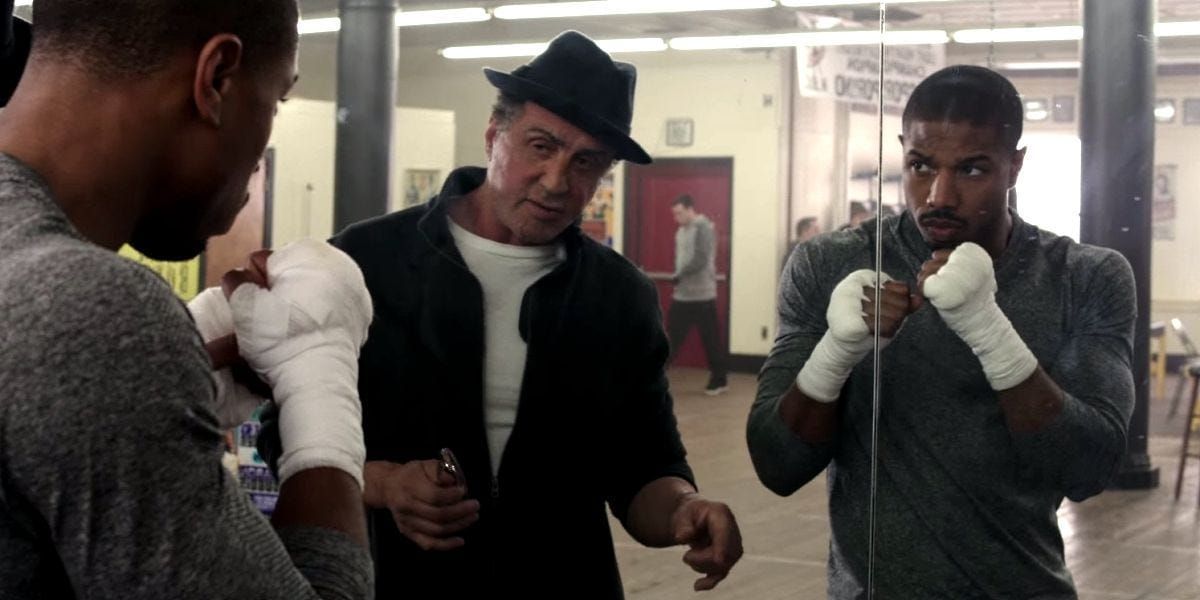
Mentor: Rocky
Trickster: Apollo Creed
Creed is what I call a ‘baton-passing story.’ Conlan is the Nemesis in the Final Struggle / Big Fight. But he and Donnie don’t actually intersect until late in the movie. So the screenwriters smartly pass the nemesis baton, one character to another.

Remember two things: (1) The primary function of a Nemesis is to provide opposition to the Protagonist. (2) Any character at any time can don the ‘mask’ of any archetype.
If you go through the movie, there are plenty of occasions in which various characters act in opposition to Donnie including these:
- The first fight in Mexico, Donnie is opposed by a fighter
- In the gym where his father used to train, Donnie is opposed by Danny “Stuntman” Wheeler
- Mary Ann opposes Donnie’s desire to pursue boxing
- In the next fight, Donnie is opposed by Pete
- At a nightclub, Donnie gets into a fight with Tone Trump
- Bianca shuts him out when he tries to apologize
Then there is the relationship with Rocky who, at first, opposes the idea of training Donnie, then when he finally agrees, there are key moments when Rocky gets in Donnie’s face. Likewise when Donnie wants Rocky to get treatment for his cancer, Rocky says no.
The script also drops in Conlan — the news report on Conlan which Donnie sees when he first moves to Philadelphia, a cutaway to Conlan in a meeting with his manager — in effect sprinkling the actual Nemesis to keep him in mind.
But primarily for the first two-thirds of the movie, the Nemesis mask is passed like a baton between characters to provide a consistent oppositional dynamic until Donnie intersects with Conlan.
Bianca as Attractor, that’s a no-brainer.
Rocky as Mentor, another no-brainer, though there’s a nice reversal in which the student becomes the teacher as Donnie inspires Rocky to do cancer treatment.
Tricksters: This shapeshifter switches sides from Ally to Enemy, Enemy to Ally, challenging the will of the Protagonist. So Bianca who gave birth to Donnie (Ally) also stayed away from him for many years (Enemy) until she took in Donnie when he was a teenager (Ally) then steers Donnie into a career as a financial analyst which he loathes (Enemy). She is dead set against Donnie being a boxer and refuses to support Donnie (Enemy) until she shows up at the end in the Big Fight (Ally).
Then there’s Apollo Creed. Donnie has mixed feelings about his father as well he should, the shadow of that abandonment the primary fuel which motivates his anger. In the final round, he even confesses to Rocky what his deepest fear is: That his father thought he was worthless.
And yet, Apollo is Donnie’s father. Thus we see a subplot in which both sides — Enemy and Ally — are in play.
So that’s my take on archetypes in Creed.
How about you? What struck you most about the characters in the movie? Head to comments and join the discussion!
Comment Archive