Pinball wizadry and screenwriting
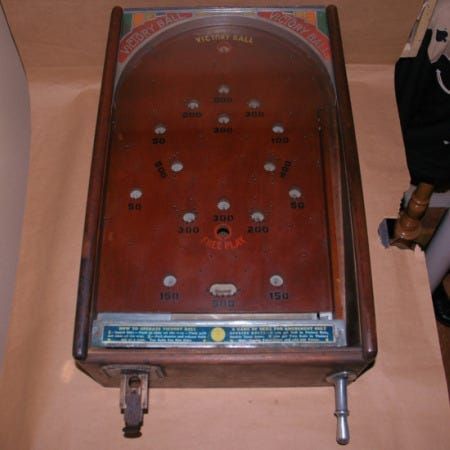
So a few days back, the NYT ran this obituary about the death of Steve Kordek, a pinball innovator.
What does pinball innovation have to do with screenwriting? To get there, let’s take a little journey starting with a bit of history per the obit:
Mr. Kordek actually revised a revision of what until the 1930s had been called the pin game. In that version a player would pull a plunger to release the ball, then shake the table in an often frustrating attempt to redirect the ball toward a scoring target — a cup or a hole.
In 1947, two designers at the D. Gottlieb & Company pinball factory in Chicago, Harry Mabs and Wayne Neyens, transformed that rudimentary game into one called Humpty Dumpty, adding six electromechanical flippers, three on each side from the top to the bottom of the field.
It was an instant hit — until, at a trade show in Chicago 1948, Mr. Kordek introduced Triple Action, a game that featured just two flippers, both controlled by buttons at the bottom of the table. Mr. Kordek was a designer for Genco, one of more than two dozen pinball manufacturers in Chicago at the time.
Not only was Mr. Kordek’s two-flipper game less expensive to produce; it also gave players greater control. For someone concentrating on keeping a chrome-plated ball from dropping into the “drain,” two flippers, one for each hand, were better than six.
“It really was revolutionary, and pretty much everyone else followed suit,” David Silverman, executive director of the National Pinball Museum in Baltimore, said in an interview. “And it’s stayed the standard for 60 years.”
Did you get that? First there is this thing called the “pin game.”
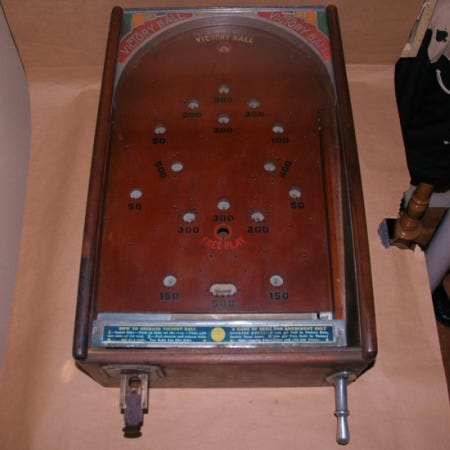
The player would literally have to shake the table to try to control the movement of the ball.
Then in 1947, two dudes came up with the innovation of flippers:
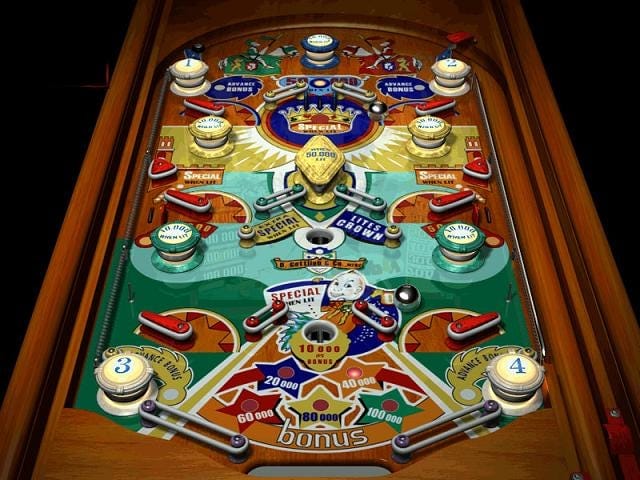
The thing is, there were three sets of flippers. Seeing as a human being only has two hands, that’s a problem, right?
So into this scenario walks Mr. Kordek. He looks at the pin game. Looks at Humpty Dumpty. Then in a moment of brilliant clarity, he says to himself, “Why not only one set of flippers?” Which led to this:
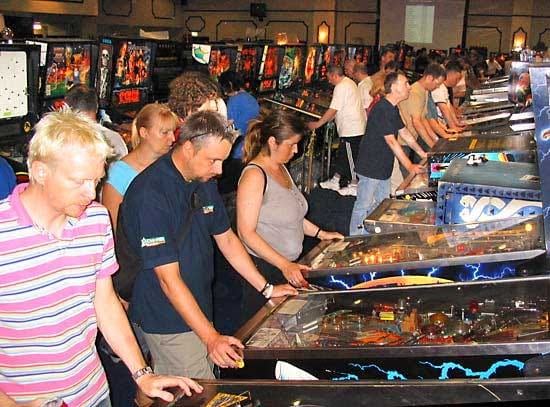
That simple creative insight transformed a good idea [i.e, flippers] into a great idea, one that became “the standard for 60 years.”
Here’s the thing: That idea — two flippers instead of six — was sitting right there. Somebody was going to come along and put two [hands] and two [flippers] together. It just so happened to be Mr. Kordek who presumably made a crap-ton of coin based on that single moment of inspiration.
Now consider the movie Dude, Where’s My Car?:
The 2000 comedy starring Ashton Kutcher and Seann William Scott:
Here’s the premise per IMDB: “Two potheads wake up from a night of partying and can’t remember where they parked their car.”
Good idea, right? Good enough to do $73M B.O. worldwide.
Then along come two screenwriters named Jon Lucas and Scott Moore. Now who knows if they were actually thinking about Dude or not, but somehow they came up with this:
And this:
Which results in this: $467M B.O. worldwide.
All because of this: “Three groomsmen lose their about-to-be-wed buddy during their drunken misadventures, then must retrace their steps in order to find him.”
How is The Hangover an improvement over Dude, Where’s My Car? For starters:
* Raise the stakes: They’re not missing a car, they’ve lost a friend, an actual human being.
* Raise the stakes even more: An actual human being who is supposed to be getting married.
* Time pressure: An actual human being who is supposed to be getting married like… right now!!!
* Las Vegas: A much better story universe because what happens in Vegas blah blah blah…
So two things. First from now on, whenever I see a project that sells or a movie that kicks ass at the box office that is really similar but different in a significantly better way, I’m going to call that a Kordek in honor of the original pinball wizard and screenwriting guru Stevie K.
Second great ideas are out there. Right the hell out there. Right the hell out there in front of our freaking faces! Oftentimes they are good ideas that exist already… but with a bit of creative juju, we can give them just the right twist to transform them into a great idea.
And great ideas, my friend, are the lifeblood of the film and TV business.
For some inspiration, here is The Who performing “Pinball Wizard” at Woodstock in 1969: