Script Analysis: “Ex Machina” — Part 3: Characters
Reading scripts. Absolutely critical to learn the craft of screenwriting. The focus of this weekly series is a deep structural and thematic analysis of each script we read. Our daily schedule:
Monday: Scene-By-Scene Breakdown
Tuesday: Plot
Wednesday: Characters
Thursday: Themes
Friday: Dialogue
Saturday: Takeaways
Today: Characters.
Characters are the players in our stories. They participate in scenes, move the plot forward through action and dialogue, influence each other, evolve and change. Each has their own distinct backstory, personality, world view, and voice. When a writer does their best, digging deep into their characters, tapping into their souls, the players in our stories magically lift up off the printed page and come to life in a reader’s imagination.
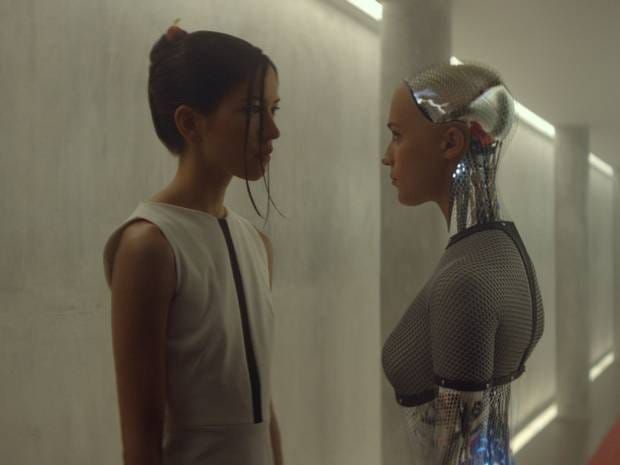
We continue our analysis of the script Ex Machina by considering the characters in the story. You may download a PDF of the script here.
Written by Alex Garland.
IMDb plot summary: A young programmer is selected to participate in a groundbreaking experiment in artificial intelligence by evaluating the human qualities of a breathtaking female A.I.
Here is a list of the key characters from the script in order of appearance:
Caleb
Nathan
Ava
Kyoko
Apart from the pilot (Jay) and a handful of other dormant A.I. creations, this is the extent of the story’s characters.
Writing Exercise: Think about the respective narrative function of each character. You may find using archetypes — Protagonist, Nemesis, Attractor, Mentor, Trickster — as a helpful tool. Remember, these are masks characters can wear, shifting one to the other from scene to scene.
Major kudos to Nick Norman-Butler for doing this week’s scene-by-scene breakdown.
For Part 1, to read the Scene-By-Scene Breakdown, go here.
For Part 2, to read Plot analysis, go here.
Tomorrow we shift our focus to the script’s key themes.
I am looking for volunteers to read a script and provide a scene-by-scene breakdown for it to be used as part of our weekly series. What do you get? Beyond your name being noted here, my thanks, and some creative juju, hopefully you will learn something about story structure and develop another skill set which is super helpful in learning and practicing the craft.
The latest volunteers:
12 Years a Slave — Georgevine Moss
Beasts of No Nation — Jacob Holmes-Brown
Bridge of Spies — Scott Guinn
Carol — Jillienne Bee
Celeste and Jesse Forever — Ryan Canty
Diary of a Teenage Girl — Cynthia
Ex Machina — Nick Norman-Butler
Frozen — Doc Kane
Inside Out — Katha
Legend — Olivia
Leviathan — Piotr Ryczko
Locke — Megaen Kelly
Macbeth — Trung
Man Up — Kristy Brooks
Monsters University — Liz Correal
Mud — Kevin
Nightcrawler — DJ Summitt
Pawn Sacrifice — Michael Waters
Steve Jobs — Angie Soliman
Straight Outta Compton — Timm Higgins
The End of the Tour — Steve F
The Iron Lady — Leslie
The Way Way Back — The Deuce
Trainwreck — Joni B
Wreck It Ralph — Kenny Crowe
Thanks, all!
To see examples of scene-by-scene breakdowns, go here. Part of the goal is to create a library of breakdowns for writers to have at their disposal for research and learning.
You may see the scripts we can use for the series — free and legal — by going here.
To date, we have analyzed 50 movie scripts, a great resource for screenwriters. To see those analyses, go here.
Thanks to any of you who will rise to the occasion and take on a scene-by-scene breakdown.
And for those of you who have volunteered, please send me your scene-by-scene breakdown as soon as possible!
Circling back to where we started, reading scripts is hugely important. Analyzing them even more so. If you want to work in Hollywood as a writer, you need to develop your critical analytical skills. This is one way to do that.
So seize this opportunity and join in the conversation!
I hope to see you in comments about this week’s script: Ex Machina.
Comment Archive