Script Analysis: “Flight” — Part 2: Major Plot Points
Reading scripts. Absolutely critical to learn the craft of screenwriting. The focus of this weekly series is a deep structural and thematic analysis of each script we read. Our daily schedule:
Monday: Scene-By-Scene Breakdown
Tuesday: Major Plot Points
Wednesday: Sequences
Thursday: Psychological Journey
Friday: Takeaways
Today: Major Plot Points.
In every scene, something happens. A plot point is a scene or group of scenes in which something major happens, an event that impacts the narrative causing it to turn in a new direction.
A relevant anecdote. Years ago, I was on the phone with a writer discussing a script project. My son Will, who was about four years old at the time, must have been listening to me talking about “plot points” during the conversation because after I hung up, he asked, “Daddy, what’s a plop point?”
That’s in effect what a plot point is. It’s an event that ‘plops’ into the narrative and changes its course. So when you think Plot Point, think Plop Point!
The value of this exercise:
* To identify the backbone of the story structure.
* To examine each major plot point and see how it is effective as an individual event.
* To analyze the major plot points in aggregate to determine why they work together as the central plot.
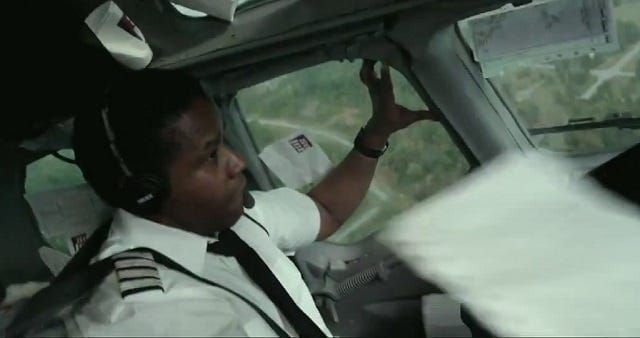
This week: Flight. You may download the script — free and legal — here.
Written by John Gatins, starring Denzel Washington, directed by Robert Zemeckis.
IMDb plot summary: An airline pilot saves almost all his passengers on his malfunctioning airliner which eventually crashed, but an investigation into the accident reveals something troubling.
Writing Exercise: Go through the scene-by-scene breakdown of Flight and identify the major plot points. Post your thoughts in comments and we’ll see if we can come up with a consensus.
If you’d like a PDF of the Flight script scene-by-scene breakdown, go here.
Major kudos to Sharita Gopal for doing this week’s breakdown.
For Part 1, to read the Scene-By-Scene Breakdown, go here.
Tomorrow we consider the script’s structure in terms of its sequences.
REQUEST: We have some incredible scripts in the GITS library which we have yet to analyze including 12 Years a Slave, Birdman, Dallas Buyers Club, Frozen, Looper, Nebraska, The Wolf of Wall Street, and many more.
I am looking for volunteers to read a script and provide a scene-by-scene breakdown for it to be used as part of our weekly series. What do you get? Beyond your name being noted here, my thanks, and some creative juju, hopefully you will learn something about story structure and develop another skill set which is super helpful in learning and practicing the craft.
The latest volunteers:
Gone Girl — Ashley
Nightcrawler — Marija
Thanks, Ashley and Marija!
To see examples of scene-by-scene breakdowns, go here. Part of the goal is to create a library of breakdowns for writers to have at their disposal for research and learning.
You may see the scripts we can use for the series — free and legal — by going here.
To date, we have analyzed 43 movie scripts, a great resource for screenwriters. To see those analyses, go here.
Thanks to any of you who will rise to the occasion and take on a scene-by-scene breakdown.
Circling back to where we started, reading scripts is hugely important. Analyzing them even more so. If you want to work in Hollywood as a writer, you need to develop your critical analytical skills. This is one way to do that.
So seize this opportunity and join in the conversation!
I hope to see you in comments about this week’s script: Flight.
Comment Archive