The Business of Screenwriting: Everything you wanted to know about specs [Part 7] Spec scripts, that is. I’m guessing that perhaps 90% of the people who follow this blog at some point in their lives will write a spec script. And the other 10% are involved in buying and selling them. In light of that fact, last year I interviewed a top
Daily Dialogue — May 14, 2015 “No! I don’t want to die! Oh, please! I don’t want to die! Oh, please! Don’t make me burn in hell. Oh, please let go of me! Please don’t kill me! Oh, don’t kill me, please!” — Angels with Dirty Faces (1938), screen play by John
Creative Spark A guest post from screenwriter Tom Benedek (Cocoon), co-founder of Screenwriting Master Class. I had never done a workshop with kids before. The Academy of Motion Picture Arts and Sciences sent a request for mentors for the Spark program they run. Wednesdays from 2 to 4PM for 10 Weeks.
Spec Script Deal: “Pale Blue Dot” Fox Searchlight acquires drama spec script “Pale Blue Dot” written by Brian C Brown and Elliott DiGuiseppi. From Variety: The story follows a successful female astronaut who, after coming back home from a mission in space, starts to unravel when confronted by her seemingly perfect American dream life. The story
Script Analysis: “Enough Said” — Part 3: Sequences Reading scripts. Absolutely critical to learn the craft of screenwriting. The focus of this weekly series is a deep structural and thematic analysis of each script we read. Our daily schedule: Monday: Scene-By-Scene Breakdown Tuesday: Major Plot Points Wednesday: Sequences Thursday: Psychological Journey Friday: Takeaways Today: Sequences. A
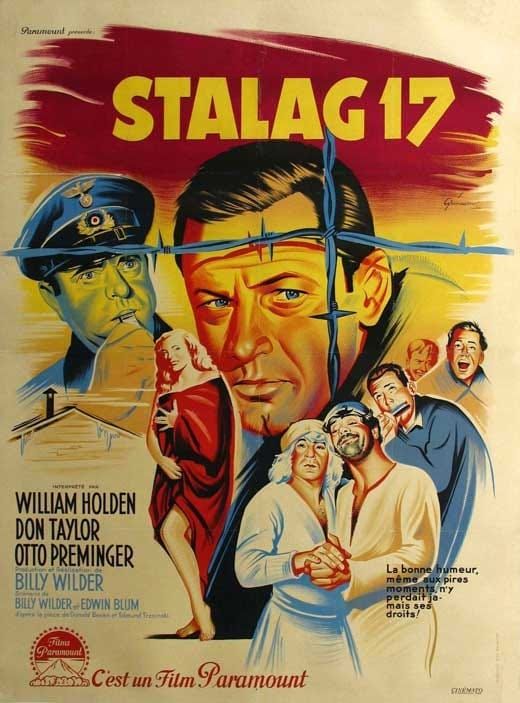
Classic 50s Movie: “Stalag 17” May is Classic 50s Movie month. Today’s guest post comes from Jim Schramm. Movie Title: Stalag 17 Year: 1953 Writers: Billy Wilder and Edwin Blum based on a play by Donald Bevan and Edmund Trzcinski Lead Actors: William Holden (Oscar winner), Otto Preminger, Don Taylor, Peter Graves Director: Billy
A Story Idea Each Day for a Month (2015) For the 6th consecutive April, I featured A Story Idea Day for a Month. Here are links to the 30 story ideas posted last month: Day 1, Day 2, Day 3, Day 4, Day 5, Day 6, Day 7, Day 8, Day 9, Day 10, Day 11, Day 12, Day
Daily Dialogue — May 13, 2015 “Daisy, Daisy, give me your answer do. I’m half crazy all for the love of you. It won’t be a stylish marriage, I can’t afford a carriage. But you’ll look sweet upon the seat of a bicycle built for two…” — 2001: A Space Odyssey (1968), screenplay
Sunday, May 17, 8PM EDT: I’m on #scriptchat This Sunday at 8PM EDT (U.S.), I will be the guest on the weekly #scriptchat conversation. What is #scriptchat? Go here to find out. Suffice to say it is one of the most vibrant communities in the online screenwriting world. Sunday’s Topic: Keys to Developing Characters. For 1
Twitter Rant: Jeff Willis on Query Letters Last week studio executive Jeff Willis went on a Twitter rant on the ins and outs of query letters. Reprinted in its entirety by permission. This morning, @BrendonUdy asked specifically for some insight on querying, so that’ll be the focus of this week’s series. https://twitter.com/jwillis81/
Script Analysis: “Enough Said” — Part 2: Major Plot Points Reading scripts. Absolutely critical to learn the craft of screenwriting. The focus of this weekly series is a deep structural and thematic analysis of each script we read. Our daily schedule: Monday: Scene-By-Scene Breakdown Tuesday: Major Plot Points Wednesday: Sequences Thursday: Psychological Journey Friday: Takeaways Today: Major Plot
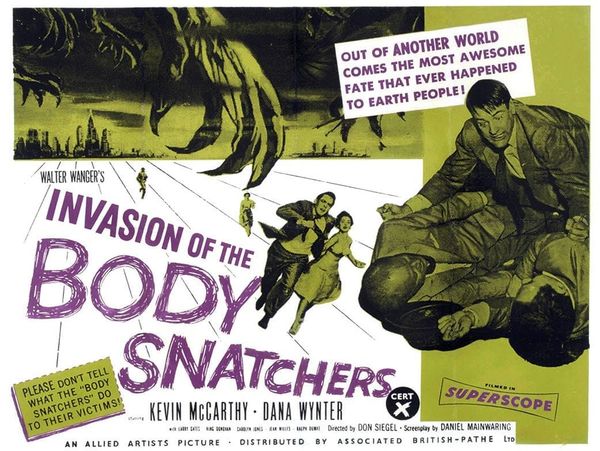
Classic 50s Movie: “Invasion of the Body Snatchers” May is Classic 50s Movie month. Today’s guest post comes from Rick Dyke. Movie Title: Invasion of the Body Snatchers Year: 1956 Writers: Daniel Mainwaring (screenplay), Jack Finney (Collier’s magazine serial), Richard Collins (uncredited) Lead Actors: Kevin McCarthy, Dana Wynter, Larry Gates Director: Don Siegel Plot Summary: A
Screenwriting 101: Susannah Grant “My goal in the first draft is to create, for the reader, the emotional experience that watching the movie will ultimately deliver. When you get around to actually making the movie, you need to break it down technically — add slug lines, more detailed descriptions. But in the early stages, all
Daily Dialogue — May 12, 2015 “Rosebud.” — Citizen Kane (1941), original screenplay by Herman J. Mankiewicz & Orson Welles The Daily Dialogue theme for the week: Famous Last Words. Today’s suggestion by Paul Graunke. Trivia: The movie’s line “Rosebud.” was voted as the #17 greatest movie quote by the American Film Institute. Dialogue On
Would you be interested in a Quest Writing Workshop? I am finalizing my summer schedule, which includes one big writing project, but I have a window in late July for a possible Quest Writing Workshop in the Los Angeles area. So let me take your pulse and see what type of interest there may be. I’m also envisioning
Twitter Rant: @ORachaelO on the Self-Delusion Imperative Last week, Rachael Prior, head of development at Big Talk Productions, waded into the nature of her work, offering a great insight the good folks who work on the other side of the desk from us writers. https://twitter.com/RachaelPriorMBE/status/596766575618830338 We talk a lot about hitting the
Script Analysis: “Enough Said” — Part 1: Scene By Scene Breakdown Reading scripts. Absolutely critical to learn the craft of screenwriting. The focus of this weekly series is a deep structural and thematic analysis of each script we read. Our daily schedule: Monday: Scene-By-Scene Breakdown Tuesday: Major Plot Points Wednesday: Sequences Thursday: Psychological Journey Friday: Takeaways Today: Scene-By-
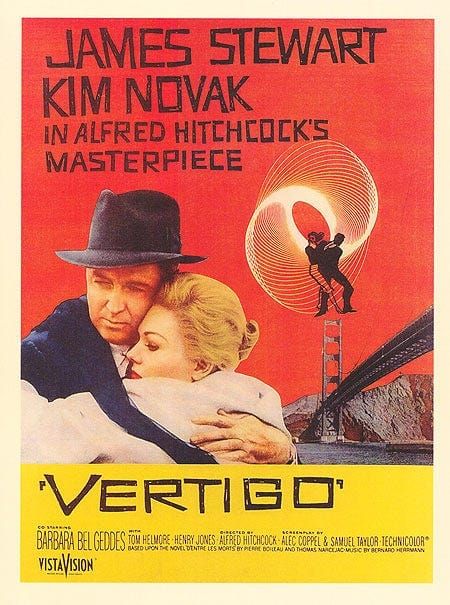
Classic 50s Movie: “Vertigo” May is Classic 50s Movie month. Today’s guest post comes from Jason Pates. Movie Title: Vertigo Year: 1958 Writers: Screenplay by Alec Coppel and Samuel A. Taylor, based on the 1954 novel D’entre les morts by Pierre Boileau and Thomas Narcejac Lead Actors: James Stewart, Kim Novak Director:
On Writing “If you focus on the humanity of your stories, your characters, then the horror will be stronger, scarier. Without the humanity, the horror becomes nothing more than a tawdry parlor trick. All flash and no magic, and worst of all, no heart.” — Don Roff Via AdviceToWriters
Daily Dialogue — May 11, 2015 They let go and Kirk walks to the glass and pushes the intercom button. Kirk: Spock! Spock slowly walks over to the glass and pushes the intercom. Spock: The ship… out of danger? Kirk: Yes. Spock: Do not grieve, Admiral. It is logical. The needs of the many, outweigh… Kirk:
Go Into The Story Week In Review: May 4-May 10, 2015 Links to this week’s most notable posts: Beau Willimon asks, “What does your Protagonist need?” Classic 50s Movie: A Star Is Born Classic 50s Movie: Harvey Classic 50s Movie: Night of the Demon Classic 50s Movie: Rear Window Classic 50s Movie: Seven Samurai Classic 50s Movie: The File on
“Conversations With Wilder”: Part 18 Billy Wilder is my all-time favorite filmmaker. Consider just some of his movies: Double Indemnity (1944), Sunset Blvd. (1950), Ace in the Hole (1951), Stalag 17 (1953), Witness for the Prosecution (1957), Some Like It Hot (1959), The Apartment (1960), an oeuvre that demonstrates an incredible range in a
Screenwriting News (May 4-May 10, 2015) Suzanne Allain, discovered off the Black List site, signs two picture deal with Warner Bros. David Auburn adapting crime drama “The Worst Marriage in Georgetown” for Voltage Pictures. Max Borenstein scripted TV pilot Minority Report goes to series at Fox. Tze Chun writing action adventure “Escape” for Paramount. Ryan Condal
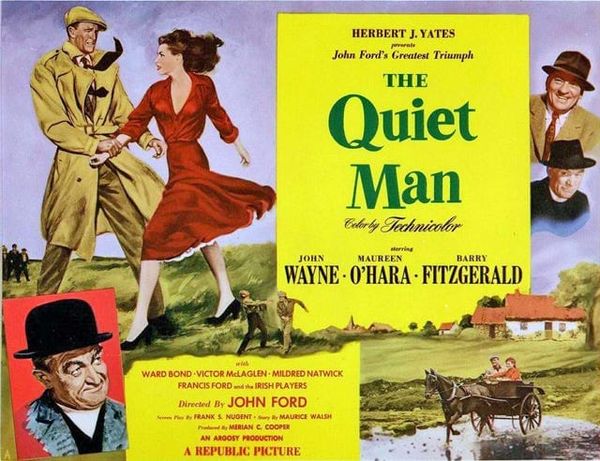
Classic 50s Movie: “The Quiet Man” May is Classic 50s Movie month. Today’s guest post comes from Traci Nell Peterson. Movie Title: The Quiet Man Year: 1952 Writers: Frank S. Nugent (screenplay), Maurice Walsh (story), John Ford (contributing writer — uncredited) Lead Actors: John Wayne, Maureen O’Hara Director: John Ford IMDb Plot Summary: A retired
Interview (Video): Walter Bernstein The good folks at the Writers Guild Foundation have an ongoing video series called “The Writer Speaks” which I’ve featured on the blog before. Its focus is on veteran writers who have great stories to tell about a film industry they have seen go through radical changes during the