Go Into The Story Interview (Part 4): Omar Al Dakheel and Elie El Choufany
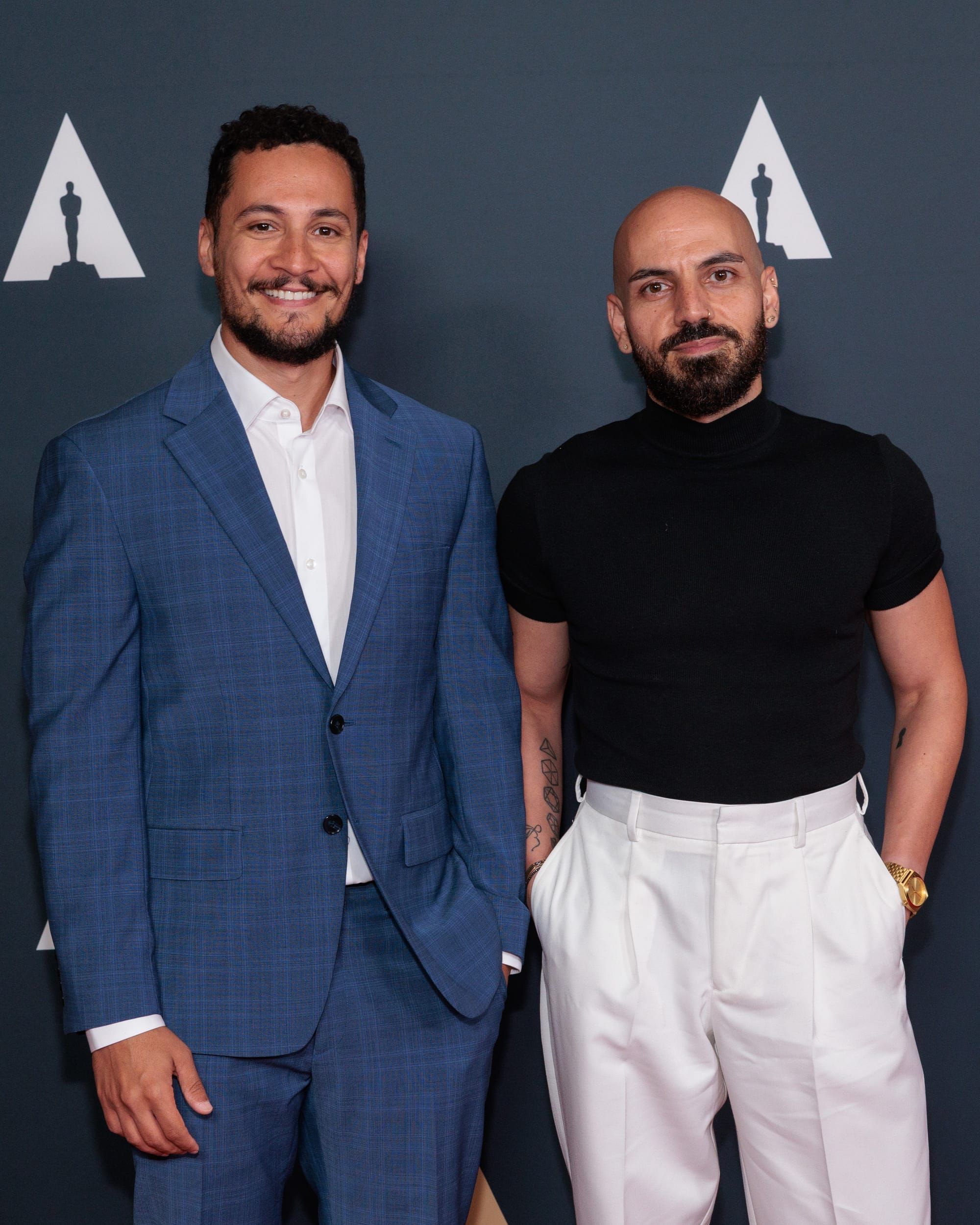
Omar Al Dakheel and Elie El Choufany wrote the original screenplay The Washroom which won a 2025-2026 Nicholl Fellowship in Screenwriting. I had an hour-long conversation with the pair exploring their creative backgrounds, analyzing their Nicholl-winning screenplay, and a discussion of key aspects of the screenwriting craft.
Today in Part 4, Omar, Elie, and I discuss the father-son relationship which lies at the core of The Washroom, plus, their use of the visual throughout the script: water.
Scott: I'm going to jump to the end. Waleed is by himself and the very last line is, "He lets himself be."
Omar: Yeah.
Scott: That reminded me of Carl Jung who said, "The privilege of a lifetime is to become who you are." It's not the doing, it's the being, right? And I was struck by that in this story. It’s specific to Waleed, but it does speak to this, the universal truth of how each one of us is tasked with just discovering our own self.
Elie: There were a lot of decisions that we consciously were trying to make in order to tell the story without it being political or centered around religion. I think one of the biggest challenges is how to tell the story without it being a cast of judgment on any shape or form of culture, religion, sexual identity, and stuff like that.
And we toyed with the idea of him running away, what that would look like. We toyed with the idea of him staying. We really tried to explore how best to bring about his becoming.
And what resonated the most was taking a breath and allowing, existing in the present and allowing yourself to breathe because in our shared experience when you are holding yourself back from fear, it feels like you're holding your breath.
And it feels like you're suffocating, and you do it long enough, you no longer recognize that you've been suffocating. I think it was important to us to have him breathe at the end to let go all of the things that he's been holding back. And that's our way of us showing that the answer is not the running, it's not the escaping. It's the becoming, like you said.
Scott: Let's pull a little more context on this. I don't want to give away key plot twists, but let's look at some of the other characters. You mentioned there is a father character, Khalid, who's described as “60s, wheelchair-bound, presence undiminished.”
Could you unpack the relationship with his father.
Omar: His father is the founding imam of this community, and Waleed's mother died when he was very young. And again, this is all the backstory of how the family couldn’t bury her according to their traditions, and that's when Khalid started building this whole community with his son. They're both very integral to this community. They're not on the sidelines. There's also expectation--
Scott: Get married and have kids…
Omar: Yeah, exactly. As Elie said, Waleed's deepest fear is being seen, especially by his father.
And he loves his father because his father is the one who took care of him, who was the one who raised him, who was the one who, defined him. And I think we all can relate to these things about our own fathers. At the same time, Khalid is physically dependent on his son because of his disability.
There are many things that make Khalid vulnerable and sympathetic: he's a widower, he uses a wheelchair, he's aging, and Waleed is his only son. There is also an interesting tension in that Khalid is physically dependent on Waleed, while Waleed feels emotionally trapped by Khalid's expectations.
Scott: There's a lovely scene in the washroom when he's bathing the imam who's died…
Omar: Yeah.
Scott: Khalid was saying, "You need to be really careful with this." It counterbalances the guy just basically saying, "Get married. Have some kids."
Omar: The father character is in many ways traditional, but in many ways is unconventional, too. We didn't want the stereotypical authoritarian Middle Eastern father. We wanted someone sympathetic, vulnerable and funny, but still strong and deeply rooted in his beliefs.
Scott: You set up the expectation, because Khalid is in such poor health, that he is going to die.
Omar: That's what everybody expects. It's easy to be cliche or to be predictable. But I think the story, which without giving it away, I think the way we end it, I think that's the most effective way in terms of telling the story that we want to tell. A lot of queer men struggle with this idea: ‘When my parents pass, then I'll live my life.’ But by then you've lost years of your own life. You'll miss life in between, and your parents are important to you. And I think you'd rather have an authentic real love, which is what the whole sermon in the beginning is about.
Scott: Oh, the original imam's sermon.
Omar: Yeah. That's the whole theme of the film. That's what we're trying to say. Real love has to exist when somebody sees the raw and real you, and not just the very crafted version.
Scott: Talking about real love leads us to another character: Hassan. This is a childhood friend, but more than a friend. Talk about that relationship between your protagonist Waleed and Hassan.
Elie: I think Hassan is the only person that's ever truly seen Waleed. And that is the basis of their relationship and their friendship, and they are both in a space where they are expected to fulfill their duty. They are expected to hold responsibility. And that goes in direct contradiction with what they want. If they uphold their duty, if they fulfill their responsibilities towards their parents and their community, then by default they can't be together. And I think this is not, I don't, I wouldn't say this is a strictly queer experience, but a lot of queer people grow up with a real fear of not being able to love the person that you love because it goes against what your parents expect from you or what your community expects from you. And that fear directs the rest of your life. And both of them, what I love about the story is that we can see that fear play out in different ways with Waleed and with Hassan, and they go in different directions with how that fear plays out. And we see the consequences of where that takes them eventually.
Scott: The scene where Waleed talks to his father about his feelings for Hassan. And his father is like, "Don't. You don't want to do this. It's going to ruin your life," right? You talk about courage. At that point in the story, Waleed has gotten to that point of courage, getting in touch with his true self, and confessing that to his father.
Elie: It goes also, it goes back to Jung like you mentioned before. Jung also says that fear is the adventure that the hero must take. And at the end of that adventure is a loss, and for Waleed, that loss is the mask that he's been wearing. It's not just his love. But he does lose the mask that he's been wearing his adult life.
Scott: I want to talk about water as a visual motif in the script. First, there's the leak in the women's section, the washroom itself, the ablutions. A big thunderstorm in the middle. And then at the end, the tranquil waters. Was that a conscious thing in the writing?
Omar: It was very conscious. Water represents cleansing and purification, but one of the ideas in the film is that there are things you cannot, and should not, cleanse away, including who you are.
Water also comes organically from the world of the story. It's part of ablution, the washing of bodies before burial, the cemetery's drainage issues, the leak in the women's section, the storm and ultimately Tranquil Waters.
So rather than imposing a symbol onto the movie, all of those images already existed naturally in the world. We just became very intentional about when water appears and what it means each time.
Tomorrow in Part 5, Elie and Omar share what their Nicholl experience has been like.
For Part 1 of the interview, go here.
Part 2, here.
Part 3, here.
I have interviewed every Nicholl winner since 2012. You may read those interviews here: LINK.