Interview (Part 2): Robin Swicord
Prolific Hollywood screenwriter whose latest is Wakefield.
Prolific Hollywood screenwriter whose latest is Wakefield.
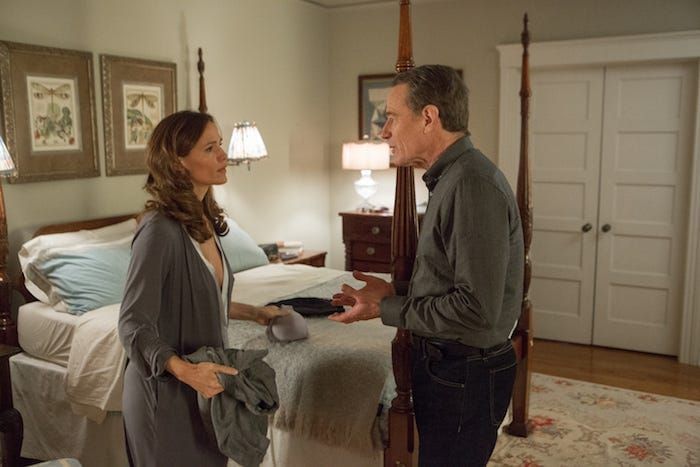
Robin Swicord is a writer, producer, and director whose movie credits include Little Women, Matilda, Memoirs of a Geisha, The Jane Austen Book Club, and The Curious Case of Benjamin Button. Her latest is Wakefield which Robin wrote and directed, and stars Bryan Cranston and Jennifer Garner. The movie premiered in New York this past Friday and rolls out to more theaters this week.
I have known Robin for many years as our children attended the same school in Los Angeles. In fact in 2013, I moderated an Austin Film Festival panel called “Deconstructing Dog Day Afternoon” in which Robin, screenwriter Peter Craig, and I broke down and analyzed that classic 1975 crime drama.
Recently I interviewed Robin about her lengthy and successful career in Hollywood. It was an hour-long conversation covering a wide range of subjects related to screenwriting and filmmaking. You will find Robin’s observations insightful, informative, and entertaining.
Today in Part 2 of this six-part series, Robin provides background on several of her movie projects including Little Women, Memoirs of a Geisha, and The Jane Austen Book Club.
Scott: I’d like to get backstory on some of the many movies with which you’ve been involved. Let’s go through these chronologically, beginning with “Little Women.” How did you get involved with that project?
Robin: That was a project that I’d wanted to do since I was a child. I didn’t know about screenwriting, but I knew that there were people that made movies. When I was a kid and I saw the “Little Women” movies on TV, cut up with dry‑cleaning commercials, I thought, “Wait, that’s not the book. That isn’t right. This book isn’t about who these girls grow up and marry. This book is about something else.”
As a child, I hadn’t articulated what that thing was to myself, but as an adult, I picked up the book again. This was a book I read every year of my life for 10, 12 years. I picked it up again, and I thought, “This is such a great book. And it’s true that there’s never been a great adaptation of it. I should do that.”
I said as much to Amy Pascal, who was a secretary for a British producer named Tony Garnet. While he was in London living his life, Amy was holding down the fort at his office in Los Angeles. She would take meetings with writers whose scripts she had read. Just invite people in and have development meetings with them. [laughs]
We were talking at lunch one day, and it turned out that Amy had been named after two of the characters in Little Women. We said, “Let’s try to get ‘Little Women’ going.” We tried for about 12 years to get a studio interested.
Meanwhile, Amy graduated from that job and got a job working with Scott Rudin, when he was briefly president of a studio, and from there she ended up at Columbia. As her career grew, we remained good friends, and we kept saying to each other, “Let’s do ‘Little Women.’”
Then there was a year when Amy had developed “Groundhog Day” and “A League of Their Own.” She called me and said, “I think we can do ‘Little Women’ now.” So we set it up.
Scott: Persistence is a key in this business, isn’t it?
Robin: It really is. You have to be an obsessive to get anything done.
Scott: Let’s talk about “Matilda,” which you co‑wrote with your husband, Nick Kazan. I remember seeing that in the theater with my son, Will, when it was released, and enjoyed it. I think this is a story you read to your kids, something you wanted to try and make because you enjoyed it so much from your familial experience.
Robin: That’s right. My husband and I would switch off nights reading to the kids. When it was my turn to read, he would hover outside the door, [laughs] so he could hear what he was going to miss. Or we would wait till the other person finished and then go get the book and read what we had missed. We loved the book as much as our children did.
We approached Liccy Dahl, who was Roald Dahl’s wife, now a widow. Liccy was not inclined initially to option the book to us, because she said that Roald Dahl himself had never been very happy with the movies that had been made. I didn’t get the sense that Roald Dahl was a real cinephile from the things that she said.
We made a suggestion: That we wouldn’t actually option it, but she would essentially make a promise not to sell the book to anyone else until she had seen our spec screenplay. Then Nick and I wrote the script and gave her a draft. And she liked it enough that we went out to sell the book and the screenplay together.
Scott: Is that the only writing project you’ve done with Nick?
Robin: I’ve written with him on another Roald Dahl project, where we ended up being rewritten, I don’t know by how many writers. Many writers worked on “The BFG” — but we were the first ones to take a crack at it. I also worked with Nick on something that was an original idea that didn’t go anywhere.
We weren’t tremendously well‑suited to do side‑by‑side writing with each other. Because we work in very different ways, our process and the way we think about story is very different.
On Matilda and The BFG, I would outline and break down the book. Nick would then do a very quick, 10‑day pass, expanding on the outline but in script form, and then I would take that back, and I would work on it for a couple of months and give it back to him.
We mostly just passed drafts back and forth, and then we would sit at the very end and go head‑to‑head about, “I want to keep this in, and you want to take it out. This is why I think it belongs in…” Those kind of conversations.
Scott: Then there’s “Memoirs of a Geisha.” At this point, I think it’s pretty safe to say a pattern’s emerged in your career ‑‑ literary adaptations. Do you think that’s become part of your brand in Hollywood?
Robin: I think that’s how people think of me. But the thing is, it’s a lot easier to get an adaptation made than to get an original story made, unless you’re making it yourself. When the Writers Guild ballot goes out at the end of the year, for us to select the best screenplays of the year, the ballot has Best Adapted and also just regular Original Screenplay.
The list for Adapted is always so much longer than Original, because it’s hard to get original work made. Studios seem to have more confidence in Intellectual Properties (I.P.) because those stories have already attracted an audience. The original stories that I have put out there have mostly not been made, but the adaptations have.
Scott: One was “The Jane Austen Book Club,” which I believe is your first feature‑length writing-directing gig. How was that experience, moving from writing to writing-directing a major studio motion picture?
Robin: Well, it was pretty seamless when it finally happened. After I did my short film, “The Red Coat”, I was able to get myself attached to an original script that I had written, but it didn’t go. The studio declined to produce it. Actually, I tried a few projects, trying to get them made as a writer-director.
There was one original script in development at Sony, “The Jane Prize”, about a family of Jane Austen scholars. Because of that screenplay, I guess John Calley thought, “Well, she’d be a good person to adapt this Jane Austen Book Club,” which was a novel by Karen Joy Fowler.
Given who John Calley was, a man I completely revered and adored, I knew that if it was between my little original movie getting made and John Calley’s adaptation of The Jane Austen Book Club getting made, he was going to win.
I loved the book and I wanted to do the job for him and for Amy, but I feared that once I did, they wouldn’t make my movie. If I didn’t take the job, someone else would get to write The Jane Austen Book Club. It was a really difficult decision for me to proceed on both fronts at the same time, but I knew that one of them wasn’t going to go.
I was the very early stage of a studio casting discussions for “The Jane Prize” when it became clear that John was going to bring in financing from Sony Classics for the other project. “The Jane Austen Book Club” was happening, happening right away. We already had an actor, someone John had approached to be a member of the ensemble cast. I didn’t have very much time to think. I had to assemble our cast and go. All of this happened very quickly once I had turned the script in to John. Within a couple of weeks I went into early prep for shooting.
Scott: Conversely, there’s “Benjamin Button”, which you received an Academy Award nomination for your part in writing the script. I believe you were involved in the project off and on for many years.
Robin: Right, it was about a 20 year journey from my first script to the time it ended up on the screen. I was attached to it for about 10 of those years. I wrote 16 different drafts of this for four different directors and two different producers.
At the end of my time with the project, I had a meeting with Sherry Lansing in which she was talking about how costly it would be to make the movie the way I had described it, and she asked me if there was a version of it that could happen in just the one year in which Benjamin turned 40, so he looked the same on the outside as he was on the inside; the thought being we would just do the love story that took place in that one year in his life.
I can really understand why a studio executive would suggest that, when they’re faced with what would turn out to be a majestically costly film. But I knew that the movie the studio was describing now wasn’t the movie I had journeyed for a decade to write. So I stepped back from the project at that point.
A few years later, David Fincher, who had been carrying my script around, decided that he would direct “Benjamin Button”; he had the opportunity to. He hired Eric Roth, who essentially rewrote me. Eric used a lot of the elements of my story, but also branched with his wonderful imagination into many things that I hadn’t thought of. It’s a kind of hybrid of what he and I both imagined. We thought differently, but it became a hybrid of the two.
Tomorrow in Part 3, Robin and I dig into the fascinating story of Howard Wakefield, the protagonist of the new movie Wakefield, the role played by Bryan Cranston.
Here is a trailer for Wakefield:
For Part 1 of the interview, go here.
I have seen Wakefield. It is an engrossing tale of a man deconstructing his life in a fascinating fashion. You may learn more about Wakefield here.
Declare Your Independents! See Wakefield in a movie theater near you!