Interview (Part 4): Matt Manfredi and Phil Hay (“The Invitation”)
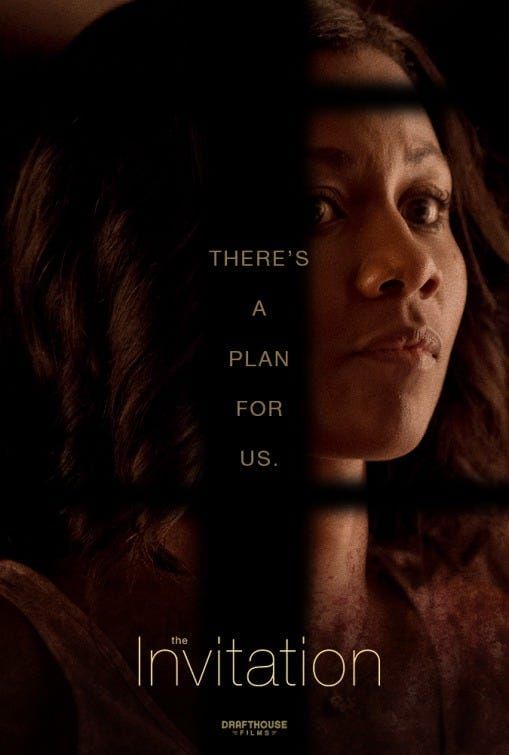
I’m a big fan of producer Mynette Louie and what she and her cohorts are doing at Gamechanger Films, a film fund for women directors, so when I saw their newest movie The Invitation was coming out in April this year, I made it a point to watch it on VOD the week it went into distribution. I loved it! So I got in touch with Mynette who connected me with the movie’s screenwriters Matt Manfredi and Phil Hay, and we ended up having a great conversation about their careers, the craft of writing and their thriller movie The Invitation.
Today in Part 4, Phil and Matt discuss the production of The Invitation:
Scott: Let’s talk about the other woman in Will’s life, Kira, who’s his current girlfriend. Here’s how you introduce her character: “Kira, 30s, is capable and watchful. There’s a quiet familiarity between them, a resigned tension.”
Not to go into it too deeply, but one way of looking at the story is that she and Will have to go through what they go through in order to end up in a better place emotionally. Does that seem like a fair assessment, stepping back from a meta view?
Phil: Without delving into the extreme events of the movie, I think ultimately, the story on their end is the willingness of two people to rely on each other and the willingness of two people to share the worst the world has to offer with each other.
That’s the only answer and she articulates it during the movie saying, “We can help each other.” That’s pretty much it. That is something that’s very, very hard for Will to accept at the beginning of this movie. Again, without giving anything away, they are very critical to each other on every level by the end of the movie. Hopefully, that is the truth that the two of them are…
Matt: There’s a line in the move that he says to her — “I don’t think you can help me.” I think that is the key to his attitude toward her. It’s not a malicious one, just a resigned one. It’s been incredibly damaging to the relationship and I think he gets into a different place with that by the very end.
Scott: What I was suggesting was, and again, I’m not trying to give away anything, he’s had a tragedy in his life and she hasn’t had anything of equivalent value. By the end of the movie, they were able to share some experiences that do put them more in an equilibrium?
Phil: I don’t know if I would necessarily look at it that way. I know what you mean, but…I think that for her to be in that relationship in the first place, she has probably overcome and gone through a lot, the way almost any adult… things start happening to us. I know that she’s had a lot of trials that have made her stronger as well.
Still, there’s some part of him that he won’t let her reach, some part that he is unable to let her access. There was once a line the script, where Tommy says that the basic thing is that she’s really worth it. You just can’t put anybody into a situation like this. She does love Will and he does love her.
Even though we meet them at a very strange time and it doesn’t seem like they’re going to make it, there is something really strong between them that is at risk.
Scott: One last character. They’re all interesting, but Pruitt is such a strange dude. “A very large and imposing man with a sweet face, the vibe of a reformed con who’s found religion.” His backstory, how did that all evolve?
Phil: He reveals that backstory in a monologue, and that monologue was in a way the centerpiece of that writing experience for us. Part of me felt like once we figured that out, we figured out something critical about the movie.
In specific terms, we have been friends for a lot of years with John Carroll Lynch, who plays Pruitt. We directed him in our movie “Bug” a long time ago. We wrote this part for him. Part of it was that — and I think John’s performance is so incredible — John portrays such calmness and such sweetness.
Matt: He’s very gentle.
Phil: He’s very gentle, but the menace that’s underneath that character is crucial to the movie because there are people in the world who you encounter that have that combination where there’s some kind of menace in them but there is such a sweetness. John said once when we were making the movie, about Pruitt, “I’ve never played a more calm and comfortable character.”
Matt: “I’m so sure of myself.”
Phil: He’s so sure of what was right and what was wrong.
Matt: There’s no menace.
Phil: That was an interesting take on a character who is instantly bracing to be around…If you’ve ever been in a room where suddenly a new person shows up and there is just something not right about him, that’s an energy that he brings.
Matt: It was the idea to bring in the destabilizing force of him and Sadie throughout this party where all you want to do, especially Will, he just wants to be comfortable. Now you’ve got some people who, just by the fact that you don’t know them, change the dynamic of the group. Also, John himself is just so physically intimidating, even when he’s just standing there. He’s a gentle guy, but he is just intimidating. That was helpful on the suspense level.
Scott: I wanted to talk to you about the structure of the story. It’s a slow burn, but it moves in an interesting way. One of the things I noticed, and I wanted to know whether you are intentionally doing this, it’s like every character’s got their one moment with Will. Was that an intentional thing?
Phil: On some level. It’s hard to know sometimes what was instinct and what was intellect. There are two things that I think about. One is that we wanted to make sure that every character had dignity, had a life, and had what was not just part of the story and was not a function of the story, but had a distinct perspective of history with Will, had their own desires for what his night was going to be, had their own pain to deal with, had their own awkwardness to deal with.
Their own lives were going on when they intersected this story. That was tremendously important to us to do that. I forgot what my second point is. Matt probably has my second point. He likely has it.
Matt: There’s a couple of things. It was a challenge filmmaking‑wise because you didn’t want to be repetitive. We’d keep him going off here, going off there. In the movie, since it’s told from his point of view, this is the way we have to get to know the characters. Like Phil said, it was important to feel something for them because of what happens later, to be invested in that in any kind of sense.
Phil: I now remember what the other thing is. This relates to that. There is a rhythm, like the tide going in, tide going out, of him trying to escape, him trying to be alone. Someone’s always there to come get him and pull him back to the group. Sometimes it’s an angel and sometimes it a devil, but there’s this gravity that keeps pulling him back in to the group.
Scott: I like that idea of the tide coming in and out. He keeps trying to get away and they keep bringing him back. It really ties it all together. Let me ask you. How in the world did this movie get made? There’s four production companies. Gamechanger, I’ve interviewed Mynettte Louie. How did that all happen?
Phil: This is a journey that took many years, even after Karyn decided to do it and we decided to make it together. Gamechanger was…they are really wonderful as you can tell by talking to Mynette. They exist to finance films directed by women. They were people who many people we know spoke very highly of, Mynette specifically as well. They came aboard first. They were really the rock that we built it on. Actually, XYZ came on first, and they were really the kind of…
Matt: We initially had talked about it as a foreign sales model. Then when we met with Gamechanger, and also, at the same time, realizing that the budget we could do it for was lower than we initially expected, it made sense to do it with equity financing at Gamechanger. Gamechanger came on and they were fantastic. The other piece was Lege Artis, which is a newer entity. They were great as well.
Phil: We financed the movie with two equity entities, but also, XYZ was there all the way. They were part of putting that financing package together, as well as producing the movie with us. They stuck with us through thick and thin and they were very deeply involved in the whole process. Every time the movie seemed to fall apart, they were there. We all got it back together and went back up the hill. When we got Gamechanger and Lege Artis, it became real.
Finally, we premiered the movie at South by Southwest in 2015. After that screening, we sold the movie to Drafthouse. We were fortunate that we had several options, but they were immediately so clearly…Their love for the movie and their understanding of how important it was to not, in the marketing, give anything away was profound.
If you meet them or know them, they’re the most passionate, incredible film people. We just felt like we were really at home with them and throughout the entire process, they were so collaborative with us and so talented at what they do, but very much wanting to merge with everything that we thought was important about not just the movie, but how it’s presented.
It was a very serendipitous series of connections and a very simpatico crew, all of them. It takes a long time to find those people. So many times, you almost get a movie together and it falls apart for one reason or another. You’ve got to pick yourself up and head back up the hill again.
Matt: There’s a lot of trust involved and we’re lucky we found such great people to work with because there’s another version of this movie that just goes off the rails at any number of stages before or after production. Drafthouse, for instance. They love movies. We could have easily sold it a company that, even with good intentions at the start, ended up treating it as a programmer or a product. Drafthouse is such a lover of film and they were so collaborative and so wonderful with the release that it just…
Phil: To me, they’re like being on Sub Pop in the ‘80’s or ’90s or something. It’s a label that actually means something.
Tomorrow in Part 5, Matt and Phil answer some key questions about the writing craft.
For Part 1 of the interview, go here.
For Part 2, here.
For Part 3, here.
Matt and Phil are repped by UTA.
Twitter: @phillycarly, @MattRManfredi.
Here is a Q&A with The Invitation director Karyn Kusama:
The Invitation website.
Rent or purchase The Invitation here.