Interview (Part 5): Justin Piasecki (2016 Nicholl Winner)
My conversation with the writer of the winning script “Death of an Ortolan”.
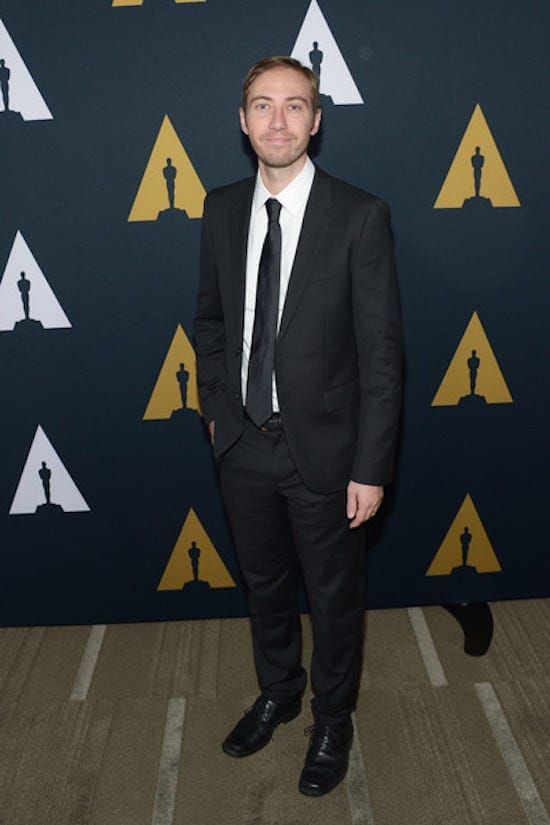
My conversation with the writer of the winning script “Death of an Ortolan”.
Justin Piasecki wrote the original screenplay “Death of an Ortolan” which won a 2016 Nicholl Fellowship in Screenwriting. Recently I had the opportunity to chat with Justin about his background, his award-winning script, the craft of screenwriting, and what winning the Nicholl has meant to him.
Today in Part 5, Justin describe what it has been like to be a Nicholl Fellowship recipient:
Scott: At the Nicholl ceremony, Peter Samuelson introduced you. He described Walter, the protagonist’s situation as being “an ordinary man with an extraordinary moral challenge.” What do you think about that?
Justin: I thought Peter did a wonderful job of presenting the moral conflict. I was incredibly proud of it being read that way.
This is a moral decision. Capital punishment is a moral decision. This is a system, but these are people.
I didn’t want to take a high ground of saying, “This is right, and this is wrong,” but I did want to take a strong stance in saying, “This is happening. Are you OK with it? What do you think?” I wanted to write something that mattered to people. So that was wonderful to hear from him.
Scott: Let’s talk about the journey of the script to where it is now. You write the script, and then what?
Justin: When I moved out here, I really had no connections by any means. I made a Google calendar of a bunch of screenplay contests and fellowships that I thought this would be a good fit for.
I just applied to as many early birds, deadlines as I could get to in time. But when you apply that early, you don’t hear anything for six to eight months. I applied and then the next day, I started working on my next script because nothing is promised, nothing is guaranteed. I wrote a pilot immediately after that.
Then I started working on another pilot when the first competition I entered, came back. I was at the top eight or something like that. I read somewhere that “Apply at three competitions and see how you do.”
I said, “OK. That’s a good science.” I’m going to send it to my next one. The next one, it was top five.
I sent to another one, and it was a finalist. I was like, “I’m going to keep sending this one out. It seems like it’s resonating with people.” It certainly didn’t place in all of them but it placed in something like the first four that I sent to. Off of the second one or third one, I signed with the manager and through that I signed with an agent. That’s where things went from there.
Scott: So it was before the Nicholl?
Justin: Yeah. I was fortunate enough to have found reps before Nicholl, but they were very happy about Nicholl.
Scott: How did you hear about the Nicholl? What was that like?
Justin: Honestly, Nicholl was the pipe dream. There are other ones that I really held out for, that I think I have a tangible, feasible shot at this.
Nicholl was never that. The first time they reach out to you in person, they do it over the phone. I didn’t understand [laughs] what was going on. I don’t know. I never thought I would get that far. Also, it was my first year ever applying to Nicholl.
I’d heard and read these stories of, “On my 12th try or something, I got this far” or whatever. For it to be the first year and it to do as well as it had done that far, it really did take me by surprise.
Scott: And your week‑long experience, of course, you didn’t have to travel anywhere. You were in Los Angeles but how was that pulling over the Beverly Hills and hanging out with all the people in there.
Justin: It’s wonderful. It’s a cram session of, “Hey, we think that you’re going to get to do this.” That alone is like, “Oh, great.” That’s a huge education in itself and here if we have five days, we’re going to try to get you as ready as possible. It’s really wonderful. They do a great job. They teach you about…you meet with reps. You meet with lawyers.
You enjoy yourself just by talking with other writers. Then of course, there’s the Nicholl committee you get to learn from. That’s an incredible opportunity in itself. There’s a just a continual mentorship with a lot of people. Now, I’m able to reach out to Peter. I was actually telling him about the next script that I want to work on.
He’s like, “You know, I know someone so you can meet with…” This is the script that I’ve been trying to research forever. In a 40‑minute lunch I’m suddenly able to meet the two heads of that industry and I was like, “This is something I could not get anywhere else. It’s hope, that you’re going to actually get to do this, no longer as your second night job but as your day job.” That’s incredible.
Scott: Let’s jump to a few craft questions here. You mentioned earlier massive outlining. That phrase jumped out at me. And research, and by the way, the research you did ‑‑ you speak with complete authority in that script. It completely feels authentic ‑‑ the cooking, the prison, all that stuff. What are the things you spent most of the time doing in prep writing? Outlining, research? Anything else that you do?
Justin: I try to read everything I can. Final Draft, which I write in, certainly has its tools, but for outlining there’s…. It’s called SuperNotecard Mindola, it’s from 2010 or something. It’s a digital notecard program and it’s got a really old draft of some Coen brothers movie as the tutorial.
Anyway, it’s a grid of notecards and you’re able to move them around and. not to make this a commercial, but honestly, this almost decade‑old software thing, super‑simple, but also really helpful in terms of outlining.
Tomorrow in Part 6, Justin gives his take on the question: what advice can you offer to aspiring screenwriters trying to learn the craft and break into Hollywood.
For Part 1 of the interview, go here.
Part 2, here.
Part 3, here.
Part 4, here.
Justin is repped by CAA and Zero Gravity Management.