Interview: Stephanie Shannon (2013 Nicholl Winner, 2013 Black List) — Part 4
Stephanie Shannon not only is one of five recipients of the 2013 Academy Nicholl Fellowships in Screenwriting, she did it with her very first full-length screenplay: “Queen of Hearts.” Beyond that, the script landed on the 2013 Black List. Therefore I was pleased to have the opportunity to talk with Stephanie about her background, the script and her take on the craft as she has developed as a writer.
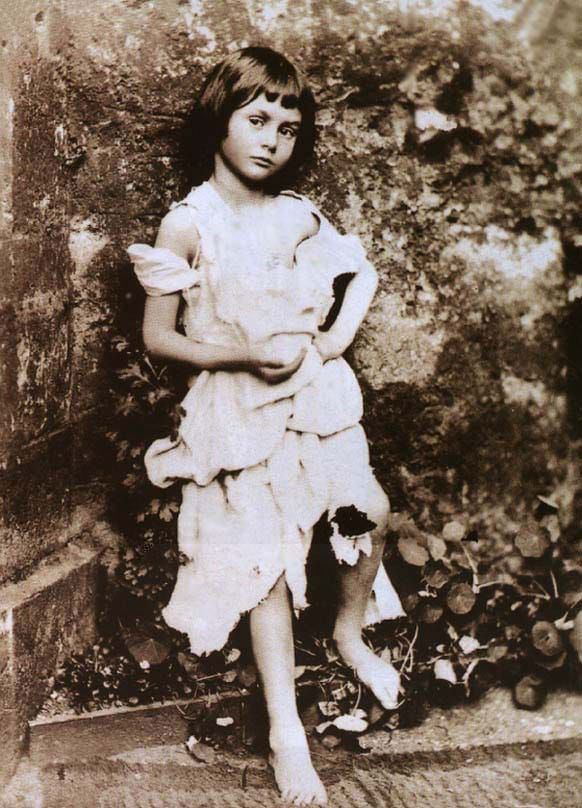
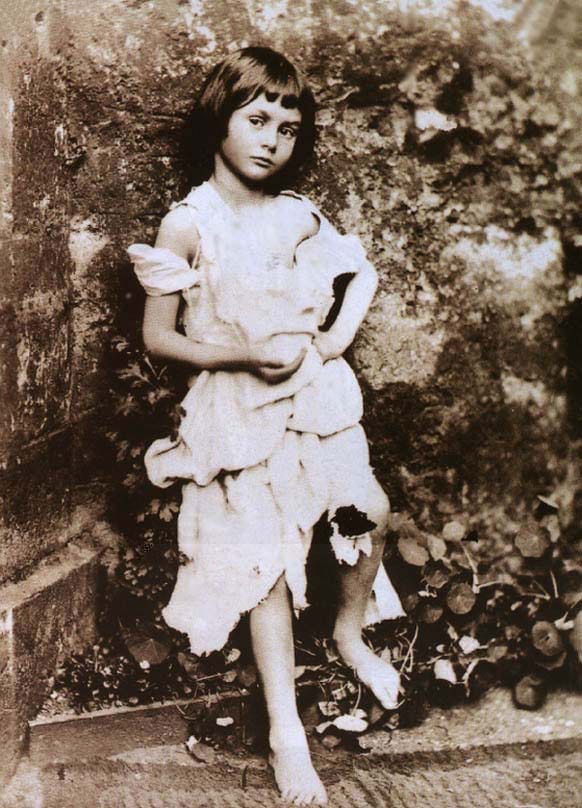
Today in Part 4, Stephanie delves more deeply into “Queen of Hearts,” examining the relationship between Dodgson and two females: A mother named Lornia and a young daughter named Alice:
Scott: It’s interesting because he [Charles Dodgson] has these two female influences, Lorina and Alice Liddell. They are both tied to his emotional development, yet they go down different paths in a way. Could you maybe talk about the mother, Lorina, and Alice, the daughter, and how you were working with them in terms of their influence on the Dodgson character?
Stephanie: With he and Lorina, she was similarly trapped in her social standing in the Victorian society and by her marriage. He was giving her something that she had never had before. At the same time, she was allowing him to really open up and express who he was.
Then the same with Charles and Alice: he was allowing Alice to really play and to have an imagination and to feel like it was OK to have fun. At the same time, she was encouraging that part of him that no one had ever encouraged before.
By having all those separate relationships work together, I wanted everyone to, by the end, grow in some measure. Even though the love affair didn’t work out, because, as we know, relationships don’t always have a happy ending in real life, I wanted the happy ending to be what came out of it. I feel like even if Charles didn’t win, we won as a society because we got this great piece of literature.
Scott: Yes. It’s interesting because, at first, Charles sees Lorina as the White Queen. Then he colors in that drawing, doesn’t he, and makes her the Red Queen. So there’s a transformation in her character. Yet, on the other hand, Alice remains true to him in a way, because Lorina creates this break, in effect. Did you always know there would be that twist, that split between Charles and Lorina and the cementing of the relationship between Charles and Alice?
Stephanie: Yes. I always thought it was interesting that all of his female characters were really dark…not dark, but just very grotesque and unpleasant and violent. I think when he was writing, later in his life someone asked him how he came up with the Queen of Hearts character. He said to him it was the embodiment of ungovernable passion.
I just liked that idea. I thought what could have happened to this man that made him feel that way about women? I wanted Lorina to start off as a positive image in his life, as this white, pure character and, by the end of it, kind of transform into that darker, more manipulative, controlling character that we see predominantly in most of his work.
As far as his relationship with Alice, I wanted that to remain true. I think what was in it for me was thinking about father daughter relationships and how important it is to be the father and make children feel like it’s OK to be who you are and have that imagination and to trust in yourself. That was an important theme for me. I was hoping his relationship with Alice would kind of highlight that in the end.
Scott: That, of course, is in contrast to Alice’s actual father, Henry. How would you describe him? He’s a pretty cold, stuffy kind of guy, a distant kind of father.
Stephanie: Yeah, exactly. I think a lot of fathers at the time may have even been like that. What I felt was interesting about Alice In Wonderland is that before it came upon the scene, most children’s books were very routine. They were all based around morals and lessons and kind of talked down to the child, making them feel like they weren’t allowed to have fun. I think Lewis Carroll is the first person to make the child the hero of the story.
I wanted Alice, in the end, to kind of feel like the hero of the story. That’s the feeling that her father never gave her. I wanted also to show that it’s a lesson Lorina didn’t learn. She’s still allowing herself, in the end, to be controlled by a man that didn’t make her happy. I wanted Alice, the next generation, to kind of learn that lesson and to learn to believe in herself.
Scott: There’s one aspect of the script that’s a lot of fun. It’s similar to that Shakespeare in Love thing where Will Shakespeare looks around the world and sees all these things that he then incorporates in a story. There are a lot of moments like that in your script. How much fun was it for you to look for opportunities, to find those moments of inspiration for both “Alice in Wonderland” and “Through the Looking Glass” in the context of the story you were constructing?
Stephanie: That was the most fun. That was the best part for me, and that’s really the original reason I wanted to tell the story.
I love movies where we can look at historical figures that we think we know and see them from a different angle, as real human beings. And then, to see what ingredients came together in their lives to culminate in a product that changed the world, be it “Alice in Wonderland” or another one of my favorite movies, Amadeus. That’s really fun.
The fantasy sequences aren’t based on anything historically true. It’s just me thinking about Oxford at the time and imagining what they may have been doing and thinking “Wouldn’t it have been cool if, when they were playing croquet for the first time, he helped her learn by imagining it was a flamingo?” and things like that.
The fantasy sequences were the most fun to do, because I had so much freedom. My script wasn’t purely fantasy, but it wasn’t a strict biopic either. I could oscillate between the two. I set it up in a way that it wouldn’t be crazy or jarring to incorporate the visuals into their everyday activities. It was a lot of fun, because I had so much freedom in that way.
Scott: The presenter for you at the Nicholl ceremony, Peter Samuelson, is a Brit. He was surprised to discover you were from Texas and has said what you’ve managed to accomplish in your script is magic when “a writer happens to inhabit a culture, a time, a place, a set of characters they are not, themselves, a part of.” When he read it he thought, “This is a great British writer.”
How much of a challenge and how fun was it for you to inhabit that specific place and time for the script?
Stephanie: It was a lot of fun. I’m always really flattered and surprised when British people tell me that. I’ve had a lot of British people say that. It was definitely a concern of mine. When I wrote it, I literally was petrified that the first British person that read it was going to laugh at me.
I felt better when I sent it to a friend of mine in England, and she had no critique. I think what helped was doing enough research and getting to know the characters enough to feel like I knew them personally.
I think the best kind of writing is when you feel like you’re taking dictation because you know what the characters would say, even if it isn’t necessarily what you would say in your own head. I kind of knew how they would talk, their mannerisms. I didn’t really study the dialects, per se.
Scott: In thinking about your script in its entirety, what you accomplished is very difficult. You’re dealing with real life characters. You’re trying to construct a story that takes this conceit, this idea that he may have possibly have had this affair with this woman. In the midst of that you run with some pretty substantive thematic things. Fantasy, reality, as well as playing around with the actual visual experience of seeing these fantasy moments, and stuff. And it’s a period piece. And you have flashbacks. Even at one point you have a flashback within a flashback.
Stephanie: [laughs] As soon as I did that I was like, “I’ll fix this later.”
Scott: You had a lot going on there. I think you did an admirable job with it.
Stephanie: Thank you so much! That’s great to hear.
Scott: So “Queen of Hearts” makes the 2013 Black List. What was that experience like?
Stephanie: I had no idea if I would make it or not, and I was beyond thrilled to see my name up there. When The Black List announces the official list, they tweet the scripts in random order, one script every minute for about an hour. They didn’t tweet my script until the very end of the hour, just when I figured I hadn’t made it. It’s such an incredible honor, as a new writer, to be recognized alongside so many great talents in the industry, both emerging and established. It also gave the script a little more heat, along with the Nicholl and the sale to Odd Lot, which happened around the same time. I felt like I had hit the spec trifecta, or like a parent whose kid makes it into Harvard. I’m just so grateful to the industry for recognizing it in the way that it did. Like the Nicholl, the Black List is such a wonderful organization, giving lesser known writers the chance to break out of obscurity and make a name for themselves. I’m just incredibly grateful to both for giving me that chance.”
Tomorrow in Part 5, Stephanie provides her take on key aspects of the screenwriting craft.
For Part 1, go here.
Part 2, here.
Part 3, here.
Please stop by comments to thank Stephanie for her time and ask any questions you may have.
Stephanie is repped by CAA and Brillstein Entertainment Partners.
Twitter: @stephshanz.
Comment Archive