Movie Analysis: “Ex Machina” — Takeaways
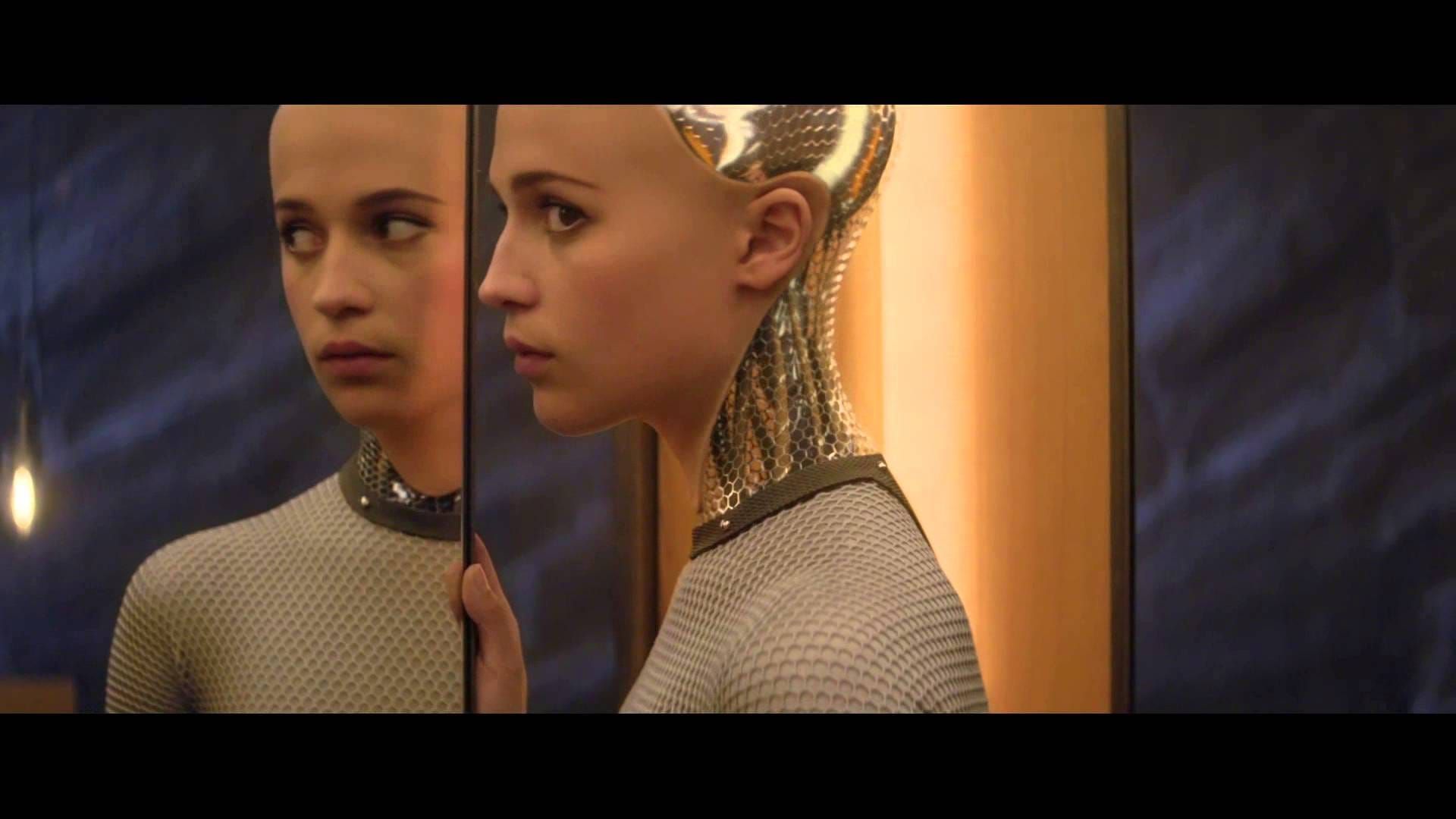
Another in our bi-weekly series in which we analyze movies currently in release. Why? To quote the writing mantra I coined over 5 years ago: Watch movies. Read scripts. Write pages. You will note which one comes first. Here are my reflections from that post about the importance of watching movies:
To be a good screenwriter, you need to have a broad exposure to the world of film. Every movie you see is a potential reference point for your writing, everything from story concepts you generate to characters you develop to scenes you construct. Moreover people who work in the movie business constantly reference existing movies when discussing stories you write; it’s a shorthand way of getting across what they mean or envision.
But most importantly, you need to watch movies in order to ‘get’ how movie stories work. If you immerse yourself in the world of film, it’s like a Gestalt experience where you begin to grasp intuitively scene composition, story structure, character functions, dialogue and subtext, transitions and pacing, and so on.
Let me add this: It’s important to see movies as they get released so that you stay on top of the business. Decisions get made in Hollywood in large part depending upon how movies perform, so watching movies as they come out puts you in the same head space as reps, producers, execs, and buyers.
This week’s movie: Ex Machina, written and directed by Alex Garland, starring Alicia Vikander, Domhnall Gleeson, and Oscar Isaac.
Our schedule for discussion this week:
Monday: General Comments
Tuesday: Plot
Wednesday: Characters
Thursday: Themes
Friday: Takeaways
For those of you who have not seen the movie, do not click MORE as we will be trafficking in major spoilers. If you have seen Ex Machina, I invite you to join me in breaking down and analyzing the movie.
I’ll start with this: Ex Machina is an example of what I call a small/big science fiction story:
Small: Cast, location, budget.
Big: Central story idea.
We are talking about a story which deals with perhaps the biggest science fiction concept of all: Artificial intelligence and the possibility of technological singularity. That concept wrapped up in a tight little package of 4 characters in a contained environment translates into a production budget of $15M.
So much easier for financiers to say, “Hell, yeah, let’s do this!” when they’re looking at the number “15” compared to “200” a la any of the huge franchise blockbusters.
That’s my advice to aspiring writers who write in the sci-fi space: Think big concept and small scope. This approach makes your spec something relevant to dozens of buyers instead of six studios which are the only companies who can afford ginormous budget movies.
What did you take away for your own writing from Ex Machina?
Next movie: Jurassic World. The week of July 6.
Comment Archive