Interview (Part 4): Robin Swicord
Prolific Hollywood screenwriter whose latest movie is Wakefield.
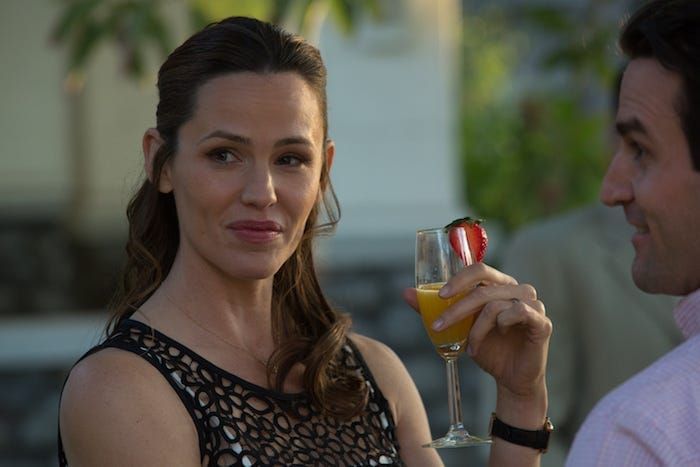
Prolific Hollywood screenwriter whose latest movie is Wakefield.
Robin Swicord is a writer, producer, and director whose movie credits include Little Women, Matilda, Memoirs of a Geisha, The Jane Austen Book Club, and The Curious Case of Benjamin Button. Her latest is Wakefield which Robin wrote and directed, and stars Bryan Cranston and Jennifer Garner. The movie premiered in New York this past Friday and rolls out to more theaters this week.
I have known Robin for many years as our children attended the same school in Los Angeles. In fact in 2013, I moderated an Austin Film Festival panel called “Deconstructing Dog Day Afternoon” in which Robin, screenwriter Peter Craig, and I broke down and analyzed that classic 1975 crime drama.
Recently I interviewed Robin about her lengthy and successful career in Hollywood. It was an hour-long conversation covering a wide range of subjects related to screenwriting and filmmaking. You will find Robin’s observations insightful, informative, and entertaining.
Today in Part 4 of this six-part series, Robin and I discuss some of the key themes in Wakefield and key choices she made as a writer-director on the project.
Scott: You hit on an interesting phrase there: wish fulfillment. In Wakefield at one point, Howard says, “Who hasn’t had the impulse to put their life on hold for a moment?” I’m sure that’s a question each of us has asked at some point in our busy lives.
Then also he has created an awkward situation. He wakes up that first morning and he says, “I’m going to have to go and explain. She probably thinks I had an affair.” Each of us has been in awkward situations.
Then the third point, once Howard commits to his course of action, he says, “I’ll sustain myself like a castaway, a survivor, undetected, unshackled. I’ll become the Howard Wakefield I was meant to be.” Who among us doesn’t want to become an ideal version of one’s self?
I think those three elements play together to create a compelling and identifiable character study.
Robin: Well, I appreciate how deeply you watched the movie and analyzed it to see that, because those were three really important points in terms of his development as a character and also points of connection for an audience.
I sometimes say about Howard Wakefield and about the movie itself, that it is strange, and he is strange, but he’s no stranger than I am. I think that’s true for all of us. If people are honest with themselves, they’ll admit that sometimes when they are driving on a freeway, they’ve thought, “I could just keep going.”
All of us have the impulse to flee our responsibilities at some time. Only a person who is in as much pain as Howard at the beginning of the film — secret, unacknowledged, even not completely fully-experienced pain — only he would do something this extreme. Wakefield had to do something this extreme, in order to jar himself into taking the inner journey that he needed to become a different man.
Scott: I’d like to talk about some of the filmmaking choices you made as a director. One thing is you’ve got two types of voice‑overs at work in the film. The first type is the traditional voice‑over narration where we’re hearing Howard’s inner thoughts.
Indeed, there’s this little bit of business with him on the train, as he’s heading home, he’s dictating on digital recorder. It occurred to me that this is a guy — a lawyer — who would dictate legal stuff, so he’s used to voicing his thoughts. That’s a great way to set up the use of voice-over narration.
Robin: That was a beautiful contribution Bryan Cranston made. It entered the script from a suggestion from him, because he wanted to establish that he was a guy who felt burdened and stuck in a routine of working all the time. I wondered, when Bryan suggested it, if he feared people would be jarred if they heard his voice for the first time as a voice‑over; but Bryan explained to me recently that his main thought with the dictation moment was to connect to his character as a guy who’s bored with his own life, though he’s unaware of it.
He had this idea that he would be dictating stuff on his phone for his assistant to type up the next day. I thought it was great. It was a great instinct. We used the hell out of it.
Scott: Then there’s this other type of voice-over where Howard comments on the action he sees through the attic window, oftentimes quite humorous in his observations. How early in the process did you have that in mind?
Robin: I had that from the very beginning. My view with him is that he’s a litigator. They stand in front of a courtroom and they talk. Or they are in mediation, talking and arguing. He’s a talker, and he’s a talker out‑louder, he’s speaks to himself when he’s alone. “Where did I put that?”
I also felt that Howard was tremendously self‑amusing, that one of his properties as a person was that he was very good at entertaining himself at the expense of others. You see him in the first part of the film really giving full flight to that and enjoying all the feelings of condescension and superiority that go with being the person standing on high, making snarky comments about people at the party.
That wears itself out, though. And after you stop filling the silences with your own voice, what begins to happen?
Scott: There’s another cinematic device you use in the movie. You mentioned it earlier: Visualizing images in Howard’s mind. Sometimes there’s are whimsical moments. Other times fantasies. There’s also a series of delusions caused when he gets a fever. Sometimes we don’t know if what we’re seeing through his eyes is real or imagined.
Could you describe what your thinking was using narrative device?
Robin: Well, I wanted to make a very subjective film. I wanted to make a film as much as possible from one person’s point of view, so that when he was mistaken about something we could be mistaken with him.
I tried to keep rigorously to things either happening in his head, or happening in the world solely when he is watching. I built that in to the screenplay. And I worked with that in planning our imagery, working with my Director of Photography, Andrei Bowden Schwarz. We shot through windows, through panes of glass, into mirrors — the idea of “subjective” became a visual throughline.
There’s one other thing: I’ve often heard people describe novels versus movies, saying that novels were interior and that movies were about what happened in people’s lives, as viewed from the outside. I have done enough adaptation that I really began to question whether this comparison is as true as people have thought. In screenplays, when you leave room for the actor to fill moments with emotional life, we easily gain access to the interior life of a character.
As much as I love novels and read them (I am an addict!), I often find some novels don’t have much rigor in terms of the narrative. Novelists can easily just go to an interior voice and spend lots of time developing back story to expose the simple question, “How did I arrive at this point?” They can explore, “This is what I dreamed last night,” and, “These are my fears, and these are the things I reject,” filling up page after page like that, while not a single narrative event has happened.
With screenplays, of course, as dramatists we rigorously follow the narrative line, with every scene ending with a plot point or some kind of change, and every scene pushing the next into existence.
Having sort of lived in both of these worlds, passing between these two places where narrative can be important and unimportant, I thought it would be fun to make a movie that was as interior as a novel. Where we were following small narrative events with that narrative tension found in a movie, yet closely observing the inner thoughts of the protagonist.
When I started taking apart “Wakefield”, thinking about adapting it, I thought, “Let’s use the interiority to try something that’s really hard to do.”
Scott: One thing I thought you did really well, you set that question into motion from the beginning: What will Howard eventually do? You sustain that tension quite literally through the last scene, in fact, the very last image.
I know it’s indicated in the short story, but could you talk about how important that was to you? Did you have that ending in mind all the way from the beginning of your creative process?
Robin: It was deliberate. I loved the way Doctorow had ended the short story. In terms of the movie, this felt like a story moment that the audience would get to experience themselves, in a subjective way. I wanted the audience to be thrown back onto themselves, to be shifted into a moment of reflection at the end of the film; to think for themselves about what will be the next thing that will happen to Howard. It kind of gives the audience ownership of that moment.
I resisted early notes that I got from people who were considering the film for financing; saying to us, “Oh no, you’ve got to change that ending. You’ve got to really spell it out to people.” But I knew that the least interesting thing would be for me to write that. Because whatever I wrote would only be one version of the possible. When I went to film festivals last fall, I had the experience of being at Q&As where an audience member would ask, “Well, what happens in the very end?” At one festival, I handed my microphone down into the audience and said, “What do you think happens?” Each person suggested a different version, as the mic was passed along. That was what I wanted: To make something that would engage the audience in that way.
Tomorrow in Part 5, Robin answers some screenwriting craft questions.
For Part 1 of the interview, go here.
Part 2, here.
Part 3, here.
I have seen Wakefield. It is an engrossing tale of a man deconstructing his life in a fascinating fashion. You may learn more about Wakefield here.
Declare Your Independents! See Wakefield in a movie theater near you!