Interview (Part 5): Robin Swicord
Prolific Hollywood screenwriter whose latest movie is Wakefield.
Prolific Hollywood screenwriter whose latest movie is Wakefield.
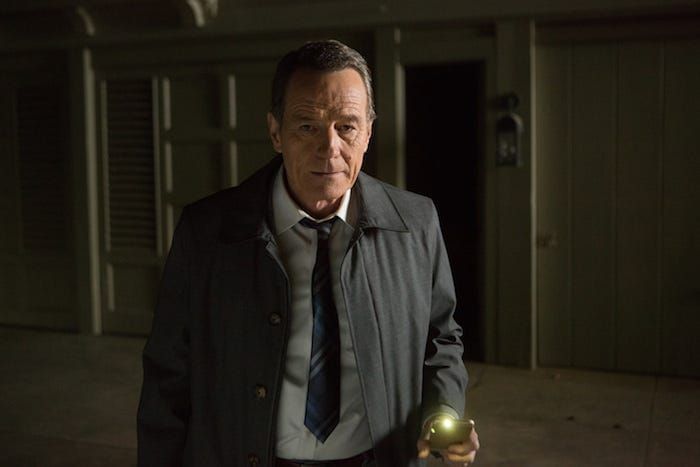
Robin Swicord is a writer, producer, and director whose movie credits include Little Women, Matilda, Memoirs of a Geisha, The Jane Austen Book Club, and The Curious Case of Benjamin Button. Her latest is Wakefield which Robin wrote and directed, and stars Bryan Cranston and Jennifer Garner. The movie premiered in New York this past Friday and rolls out to more theaters this week.
I have known Robin for many years as our children attended the same school in Los Angeles. In fact in 2013, I moderated an Austin Film Festival panel called “Deconstructing Dog Day Afternoon” in which Robin, screenwriter Peter Craig, and I broke down and analyzed that classic 1975 crime drama.
Recently I interviewed Robin about her lengthy and successful career in Hollywood. It was an hour-long conversation covering a wide range of subjects related to screenwriting and filmmaking. You will find Robin’s observations insightful, informative, and entertaining.
Today in Part 5 of this six-part series, Robin answers some screenwriting craft questions.
Scott: You mentioned financing and I looked at the list of producers. I think there’s 41 of them. How challenging was it to secure financing for the project?
Robin: Yeah, it wasn’t my challenge, fortunately. I have wonderful producers — Julie Lynn, Bonnie Curtis, and Elliot Webb. Elliot Webb was the person who put me together with Doctorow and encouraged me to write the first draft. But Julie and Bonnie put the production together when I brought them the script.
I had worked with Julie on “The Jane Austin Book Club”. She really can squeeze a nickel [laughs] when it comes to a budget. That was one of the reasons why I wanted her to partner with John Calley on “The Jane Austin Book Club”.
She’s a wonderful producer. She has learned so much in making low budget films. She makes high-quality films for much less than you would think. She would like to break out of that niche, believe me. She would like to be a little more solvent personally, going forward! And she deserves to be.
In this case, she and Bonnie together went out to private equity to raise the money for this film, because we knew it wasn’t a studio film; and because foreign sales estimates for Bryan were at that time not as high as we needed them to be, in order to deficit- finance the movie.
At the time we were started to raise money initially, “Breaking Bad” wasn’t being shown in Europe. Over the time it took us to pull the movie together, Bryan’s star rose in terms of what his value was to foreign sales people.
Our best hope for private equity was to go to investors who were true Cranston fans. And Julie and Bonnie found two producers who adored Bryan Cranston — they were seasoned Broadway producers who pulled together the equity to bring “All The Way” to Broadway, Robert Schenkkan’s play in which Bryan Cranston had played the role of LBJ.
We ended up with only a small window of time when Bryan was available to shoot our film, a shift in his schedule that meant we had to get financed in only 9 weeks. So Julie and Bonnie were under a great deal of pressure. Broadway producers Wendy Federman and Carl Moellenberg said, “Stop right where you are. We’re going to help you raise what you need.” Wendy said, “I’m going to go to the people who came in with us before — because they’ll all be so disappointed if they don’t get to participate.” It was a godsend to have Wendy and Carl join us on “Wakefield” with that good energy, that can-do feeling. They pulled it together in record time. I also called on those 41 producers much later, when we went to New York to shoot our title sequence at Grand Central Station. I seeded our producers among the public crowd there, which added tons of production value. They all knew Bryan Cranston from doing the show with him on Broadway — it was a reunion.
Scott: Well, Cranston’s performance is phenomenal. The movie opens Friday May 19th in North America. I certainly encourage people to watch it. It’s a really intriguing and compelling story. You did a wonderful job with it, Robin.
Robin: Thank you so much. I really appreciate that. You’re a wonderful watcher of movies. Your questions have been great.
Scott: Thanks for that. Let’s jump to some craft questions. How do you go about developing characters?
Robin: I do a lot of just trying to inhabit the characters first, thinking the way that they think. It’s not writing that anyone’s ever going to see. It’s just writing as a way of getting under the skin of the character.
I look for certain things: A very strong desire in that character, for something that is not easy to get. The other thing I look for and explore until I find is, “What is it that this person is contending with inside themselves?” And: What narrative question is at the core of this journey that they’ve been launched into?
In imagining the antagonist, I think: What is it about this person that makes them the ideal antagonist for this protagonist? What does this person bring to the story that clashes so perfectly with our main character’s inner struggle?
I don’t write characters well when I try to write from the outside. I have to write them from the inside out. I apply analysis from the outside to make sure that there are enough character elements there, to allow a full narrative to emerge from the character. That’s what you want: For the action to rise from the character.
Spending that time in getting to know your people is essential. When I mentor writers, one thing we do is exercises that are like meditation exercises, to get inside the characters.
Scott: I’m so in sync with you on that. When I teach, that’s precisely how we approach things.
In fact, the point you’re making about how you go about developing an antagonist figure, we get into this idea of Carl Jung and the shadow, that if you can look at the protagonist and say, “What is their shadow dynamic, the dark, repressed, negative aspects of their psyche? What if you physicalize that in the form of the antagonist?”
That creates a psychological connection between the two characters. It’s like the protagonist has to face down that which they fear the most or that which they’re trying to repress, in the form of the antagonist figure. Does that resonate with you?
Robin: Yes. It’s not accidental. Who your characters are also comes out of what you’re beginning to explore thematically. It’s all of a piece. For me, the more time you spend thinking deeply about the story in terms of “What is it that I am really trying to say here?” and the more personal that you can make it, using what you yourself have contended with, or those things you’re maybe afraid to think about much — that’s going to be juicy writing.
Tomorrow in Part 6, Robin gives sound advice for aspiring screenwriters.
Here is video of a 2014 Austin Film Festival panel I moderated with Robin Swicord and Peter Craig discussing the movie Dog Day Afternoon:
For Part 1 of the interview, go here.
Part 2, here.
Part 3, here.
Part 4, here.
I have seen Wakefield. It is an engrossing tale of a man deconstructing his life in a fascinating fashion. You may learn more about Wakefield here.
Declare Your Independents! See Wakefield in a movie theater near you!