Interview (Part 6): Jon Spaihts
A 6 part series featuring one of Hollywood’s most sought after screenwriters.
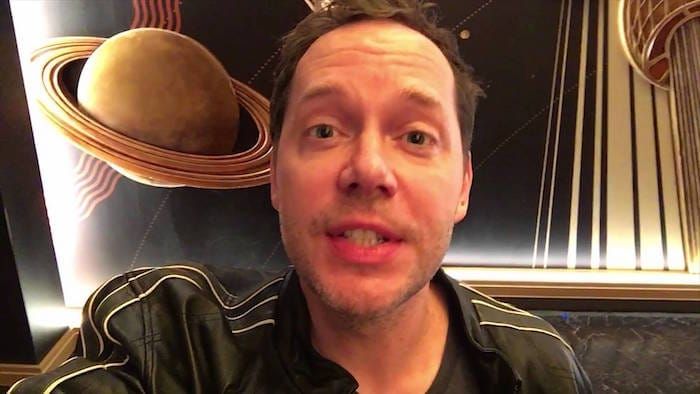
A 6 part series featuring one of Hollywood’s most sought after screenwriters.
I have been a fan of Jon Spaihts and his writing for years, so I was excited to have the opportunity recently to spend an hour talking with him about his career, his movies, and the screenwriting craft. His movie credits include Prometheus, Doctor Strange, and his latest Passengers, along with the upcoming films Van Helsing and The Mummy among many others.
Today in Part 6, Jon delves more deeply into craft questions and provides great advice for aspiring screenwriters:
Scott: How do you go about developing your characters? Are there any specific tools that you use?
Jon: The thing you referred to earlier is still the way I most often arrive at them. I begin stories by imagining a predicament. That predicament calls a protagonist who would be the most intriguing person to see in that dilemma.
Usually, it involves finding someone who would have, in that dilemma, a superpower and an Achilles’ heel. Faced with a predicament, you want somebody who’s going to be great at coping with that, except for this one respect in which they’re going to be a train wreck, and have a weakness or a blind spot. Often, I think that’s the soul of good character.
I worked up a story about a bunch of robots a few years back. Can’t say too much about it yet because it’s still a thing that might go forward, but in individuating the robots, I gave each of them a combat specialty, a kind of superpower, and I gave each of them a disability.
They’re just robots; they don’t say anything, but what was amazing to me was how much, in the intersection of a superpower and a disability, character emerged. It was almost all you needed.
Scott: How about theme? Are you one of those people that starts with themes, or do they emerge in the process of your writing?
Jon: For me, theme almost always emerges. Sometimes it emerges right away. Meaning that you come up with a grand dilemma, it evolves into a story that’s got a beautiful arc and shape to it, and you see that, “Oh, this is a story about so and so, it’s about invention, it’s about arrogance, it’s about solitude, it’s about some proposition about human nature.”
But, the other times, you’re just telling a great yarn, and I believe in a great yarn. I don’t buy an overemphasis on character change. I think there are a lot of great stories about characters that don’t change much. In life, people rarely undergo personal revolutions.
I think stories can be great without having a point to make, as long as they’re, in the old campfire sense, great yarns. I think it’s enough. Tou can hamstring a story by trying to wedge it into preconceived notions of character arc, three‑act structure, and so forth. A story wants to be itself.
Very often, even if you are just telling what seems like a good tale, theme does emerge in the polishing if it didn’t emerge in the structural work…and the final polish on a script is where an enormous percentage of its quality comes from. The last 5%, when you go through and give as many scenes as possible propulsive transitions into the scene that follows. When you remove as much exposition as you can so that no explanation is ever given twice and the story becomes an elegant framework. When you go through and find commonalities, or rhymes, or repetitions in the script and you emphasize them and make them elements of art, then very often you will find yourself reinforcing a theme, at first unconsciously and then consciously.
Scott: Actually, you’re the perfect person to ask this question. I get asked this myself, via my blog and whatnot, where people are trying to break into the business and they want to write science fiction. They are concerned about writing a spec script, being outside the business, with a big budget, like a hundred to two hundred million dollar budget.
My impression is that the conventional wisdom is, in Hollywood, the development community, is that science fiction is one of, if not the most, difficult genres to write ‑‑ the world building, the technical jargon, the physics of the story universe. It’s a pretty select group of writers, of which you are one, that Hollywood would feel comfortable handing over the reins.
The question that I oftentimes will get is, “Should I write this big idea that I have as a spec script that’s going to be a super huge budget thing? Or, would it be smarter to write a big idea, small budget science fiction script, a la Moon, which would not only be easier for a buyer to get behind, if it were 5 or 10 million dollars?”
But, also, you have a lot more buyers out there potentially. If you have a hundred million dollar thing, you can go to six studios. Do you have any thoughts on that?
Jon: A couple of pieces to that. First, about writing science fiction. Science fiction is a broad term that embraces stories set in the world as we know it with one wrinkle, one change, sometimes a small change. I think a lot of people can tackle that story.
I can mean a story built on a lot of hard, detailed science, in which case you’d better have a background in it, or a talent for research and technical language.
It can also mean a “Star Wars”‑like story set in a far-off place where different languages are spoken, and you’re inventing alien races and the entire history of a civilization, and a war, and factions, and the whole deal. That is a more specialized kind of tale.
People are going to be good at that to the extent that they have been exposed to that. If they’ve been reading stories of empire, whether they’re real historical tales from the history of our world or magical stories of a fictional worlds, then they’re going to have vocabulary there and they’re more likely to do good work. If they’re jumping in cold, they’re unlikely to get it done.
I would be a lousy pick to write a baseball movie: I don’t follow sports. I know a little bit about the game. I enjoy watching it. I’ve seen other baseball movies, so I could write something that kind of walked and talked like a baseball movie, but I would be parroting. Somebody who knew the game well would detect me instantly as someone with shallow roots in that world.
That’s the danger of writing science fiction if you are not a fan, if you are not steeped in it, because it will show. You’ll find yourself, to a much greater extent than maybe you realized was visible, parroting the work of other science fiction filmmakers, and it will reveal you — but if you’re good, if you’re deep and you have game there, then by all means go for it.
It’s worth noting that a lot of the most successful sci‑fi world-builders have been deeply schooled in real human history. “The Lord of the Rings” was written by a philologist, and the map is based on the map of Great Britain and the tribes are based on some of the old song cycles of the English language and out of Scandinavia.
Everything there is deeply informed by centuries of mythology and history. “Dune” was written with and is deeply informed by a history of Islam and the Arab world, and trade wars. George R. R. Martin was leaning heavily on historical events when he shaped “Game of Thrones.” You can feel the grit, in those very different fantastical universes, of people who have done their reading, who have a deep, and subtle, and detailed understanding of the way empires rise, run, and fall. If somebody comes in and writes a fantasy movie or sci‑fi movie based on the role‑playing game they play a lot, you can smell them. The people who are deep in history and write real worlds, you can sense.
To talk about the other point and writing big budgets versus small ones, it is a tricky game. If you write a great big‑budget movie idea as a young writer, it will be attractive to people. Everybody’s looking for that great big‑budget movie. The upside to a studio — a thing that could go massive and make half‑a‑billion dollars or more — is so big that they’ll never stop looking for those projects.
However, if, as a young writer — and I mean young as “early in your career,” not necessarily early in your chronological life — if you do get one of those things sold, you are much more likely to lose control of it and watch it move on without you. Which, by the way, is still a win. You write the next one and the next one until that stops happening.
You have better chances of staying on board if you write something with a more approachable budget. If you can write that clever $25 million movie or $5 million movie with a big‑budget, jaw‑dropping idea, I think there’s also an appetite for that. There are more players who can make that film. On the other hand, it’s also more likely to get made straight-to-video with B-list actors and dropped in a bin somewhere.
There’s up sides and down sides to every aspect of the game.
Scott: Let’s end it with this. What advice would you offer to aspiring screenwriters about learning the craft and breaking into Hollywood?
John: I think there’s only one version of the good advice, and I’m not the first to say it. You’ve got to expose yourself to the medium. That means you’ve got to watch movies attentively, and then watch them again with the sound off. Then watch them with the director’s commentary on. Then watch them with a stopwatch and a notepad and see what they’re doing. Take them apart in your head.
Read the script and then watch the movie. Watch the movie and then read the script. Watch the movie with the script in your lap. Study the parts. You have to see through the surfaces. Being a fan is insufficient. Break it down. That means slowing it down and looking at it through a series of different lenses.
Once you’ve begun to do that, you can see what the parts of a screenplay and the parts of a movie do. Then you just need to believe in your taste and in your heart, and write for yourself. Write the story that thrills you. Ignore any advice you’ll be given about writing to the market.
Forget trying to write what’s popular this year. You’re already too late. Forget trying to write into a new space where you think no one else is writing. You’ll be wrong. Don’t strategize. Write what you love. Write to thrill yourself. Put your butt in an imaginary velvet‑covered seat, eat some popcorn, close your eyes and write down what you see.
For Part 1 of the interview, go here.
Part 2, here.
Part 3, here.
Part 4, here.
Part 5, here.
Passengers, which stars Jennifer Lawrence and Chris Pratt, opens this week in North America and theaters around the world.
Visit the movie’s website here.
For more background on the movie’s decade long odyssey from script to screen, check out this Hollywood Reporter article: ‘Passengers’: The Long, Strange Trip to the Big Screen. And this Indiewire article: ‘Passengers’: Why It Took a Decade to Launch a Black List Darling.
And this: The Science Of ‘Passengers’ According To Screenwriter Jon Spaihts.
Jon is repped by CAA and Circle of Confusion.
Twitter: @jonspaihts.