Interview (Part 6): Robin Swicord
Prolific Hollywood screenwriter whose latest movie is Wakefield.
Prolific Hollywood screenwriter whose latest movie is Wakefield.
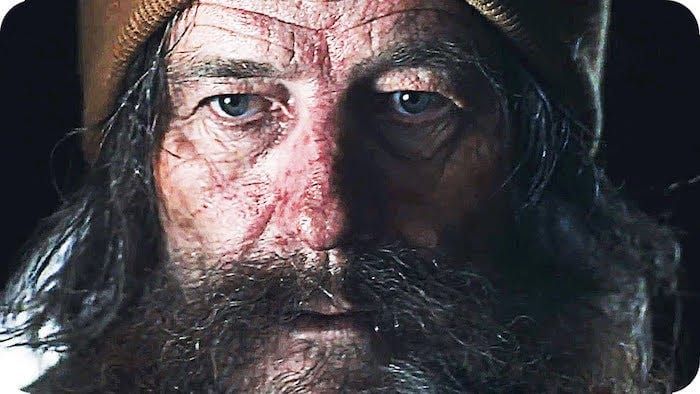
Robin Swicord is a writer, producer, and director whose movie credits include Little Women, Matilda, Memoirs of a Geisha, The Jane Austen Book Club, and The Curious Case of Benjamin Button. Her latest is Wakefield which Robin wrote and directed, and stars Bryan Cranston and Jennifer Garner. The movie premiered in New York this past Friday and rolls out to more theaters this week.
I have known Robin for many years as our children attended the same school in Los Angeles. In fact in 2013, I moderated an Austin Film Festival panel called “Deconstructing Dog Day Afternoon” in which Robin, screenwriter Peter Craig, and I broke down and analyzed that classic 1975 crime drama.
Recently I interviewed Robin about her lengthy and successful career in Hollywood. It was an hour-long conversation covering a wide range of subjects related to screenwriting and filmmaking. You will find Robin’s observations insightful, informative, and entertaining.
Today in Part 6 of the six-part series, Robin gives sound advice for aspiring screenwriters.
Scott: Continuing with some craft questions, what about dialogue? You’ve got such a great ear for dialogue. How do you go about finding your characters’ voices?
Robin: I appreciate what you’re saying about that. Sometimes I think I don’t write very good dialogue. I get in my own way sometimes. I get task‑oriented. I have to stop myself from doing that.
I think that all of this dialogue comes out of the characters themselves. What happens…there’s a kind of mystical transference that happens when you’ve done this very deep thinking and feeling about your character. You begin to embody your character. I literally feel like a character enters me sometimes. I don’t worry about writing the dialogue. I just sit at my desk and feel their presence, and then they speak and I write down what they say. Then later I’ll come back to the page, and I’ll go, “But I don’t like this scene.” Or “I don’t feel like we need this scene.” Or “I think this goes on too long.” The writer in the room starts adjusting things, so what’s on the page is not just mental run‑on sentences of dialogue.
Often if I’ve thrown out a scene I’m very happy to see it go, even though I heard all those voices that felt so right at the time. I don’t worry, because if I re‑imagine it and put myself in that same place, I’m going to get a whole new tranche of dialogue. It’s going to be given to me by the characters.
Actually the script I just turned in this week, that I’ve been writing for the past eight weeks, and thinking about for two years… I tried something there in terms of technical craft was really useful to me. Which is: There’s always a part at the beginning of a scene, where you set up the scene with prose. You have to be concise and choose your words well, so that you’re not using more than you need to create a vivid film image that sets the scene for the reader.
I spend more time on that task than I want to sometimes, because I don’t want there to be big blocks of clunky description. I want the reader to seamlessly fly through the screenplay, and feel that they’re watching a movie.
On this new script, I hit on a technique of not writing the set-up, first. I typed “Interior” or “Exterior” and the place. And then just let myself be in the character’s presence. I didn’t even type the character’s name above dialogue. I left the format in Final Draft’s “Dialogue” mode, and just wrote down the transcript of what my characters were saying, as one long block of unparagraphed dialogue. I had already deeply imagined the scene during outlining, so I was in free-fall. After I’d come to the end of their dialogue, I inserted the character names, and clarified things with actions. Then I went to the top of the scene, and did the simple technical part of setting up the scene. For me, it was like writing in a backward order.
The result was: I wrote so much faster. I had felt I needed from 12 to 14 weeks to do a first draft — it was to be a long draft, the producers and I more or less intended this first draft to come in at about 140 pages, with the intention to edit it to something shorter on Draft 2. But with this experiment with technique, I was able to finish in 8 weeks.
Scott: Maybe disengaging I think you said the task…what did you call it ‑‑ they’re task‑oriented?
Robin: Task‑oriented. We have two creative minds. An executive mind, a planning, strategic, putting‑my‑ducks‑in‑a‑row mind. But that’s a different kind of writing than the receptive writing of hearing your characters and embodying them. We need both. One mind where you sit and craft sentences that draw the reader into the scene. Another that allows your characters to come alive.
Scott: This is a question I’m sure you get asked all the time but I feel like it’s a worthy one to end the interview with. What advice can you offer to aspiring screenwriters about learning the craft and breaking into Hollywood?
Robin: There’s no single way to get into Hollywood. You just have to push your way in through writing well, and making sure you give a copy of your script to everyone you run into. [laughs] “Everyone must read this!” But learning the craft before you ask someone to read is the essential thing.
I can only say how I learned: At your every opportunity be watching movies again, that you have already seen. Watch movies over and over. I got into a thing of watching with the sound off.
You begin to really see what happens from scene to scene and how these things connect, and how the film is paced, and you begin to notice certain patterns. When I teach structure, what I teach are the patterns that I detected watching movies.
I began to see that something very important happened halfway through, usually, that made the story more emotional. I noticed that toward the end of the movie, somewhere about two‑thirds into it, things were about as bad as they could ever get. That was the point where you think it’s just impossible for anything to work out. Then something would happen. And that’s the start of Act Three.
These were all discoveries I made when I was trying to teach myself to write. I do think that writing is largely self‑taught. I would say watch movies as many times as you can until you really understand them. Take notes for yourself about how they work.
For Part 1 of the interview, go here.
Part 2, here.
Part 3, here.
Part 4, here.
Part 5, here.
I have seen Wakefield. It is an engrossing tale of a man deconstructing his life in a fascinating fashion. You may learn more about Wakefield here.
Declare Your Independents! See Wakefield in a movie theater near you!